Why Can't My Child Sit Still or Stay on One Thing?
Up from the table, off to the next toy, gone from story time. The same restless look can have very different causes, and each needs a different kind of help.
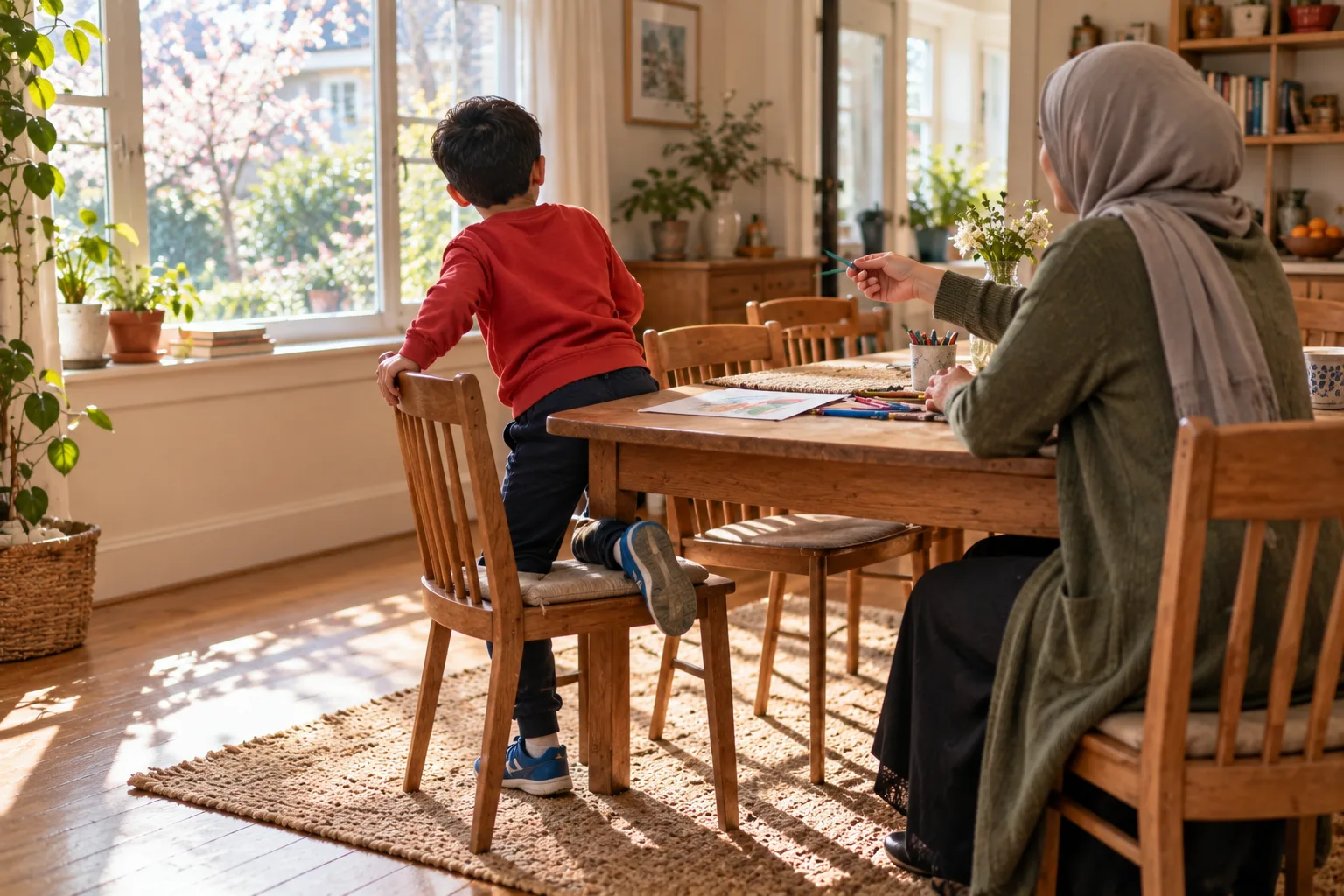
Dinner has barely started and your child is already kneeling on the chair, then standing beside it, then across the room to check on something. The drawing you set up together lasted about ninety seconds. At story time, the other children are on the rug while yours is over by the window. The note from daycare says "busy," and you know exactly what they mean.
It is tiring, and it is easy to start hearing "just sit down" coming out of your mouth all day. But here is something that may help: two children can look equally restless for completely different reasons. And what helps one of them might do nothing at all for the other.
First, some reassurance
Young children are not built to sit still. Moving is how they learn, and short bursts of attention are normal in the early years. A three-year-old may manage only a handful of minutes on one thing, and even a five- or six-year-old usually needs plenty of breaks.
It also depends on the setting. The same child who is called "lively" and "full of energy" at the park might be called "restless" in a classroom. So before asking what is wrong, it helps to ask what the moment is asking of them, and whether that is a fair ask for a child this young.

Four very different reasons behind the same restlessness
1. The body is trying to wake itself up. Picture yourself in a long, warm meeting after lunch. Your eyelids get heavy, so you shift in your seat, tap your pen, and find a reason to go and refill your water. You are not being rude. You are keeping yourself awake. Some children feel a bit like that much of the time, and running, climbing and bumping around is how they stay alert. When you make them stop, they may actually get sleepier and less able to focus.
2. Something feels uncomfortable, and they are getting away from it. Imagine trying to work next to a blaring speaker, in a scratchy jumper, with someone brushing past your chair every few seconds. You would keep getting up too. A child who is bothered by noise, light touch or a crowded room may look restless when really they are trying to escape. They are often the ones who wander off just as the group gets close.
3. Everything is calling for attention at once. Most of us can ignore the hum of the fridge or the poster on the wall. Some children find this much harder. Imagine reading a book in a room with ten TVs on. A bird outside, a pencil rolling, someone's cough: each one pulls their attention away, and they follow it before they have even decided to.
4. They are not sure what they are meant to be doing. Think of being dropped into a board game halfway through, with nobody explaining the rules. You would probably look around, fiddle with the pieces and drift off. A child who has not quite understood the instruction, or who finds the task too hard, may wander simply because they do not know how to begin.
Many children are a mix of these, and it can change from day to day.
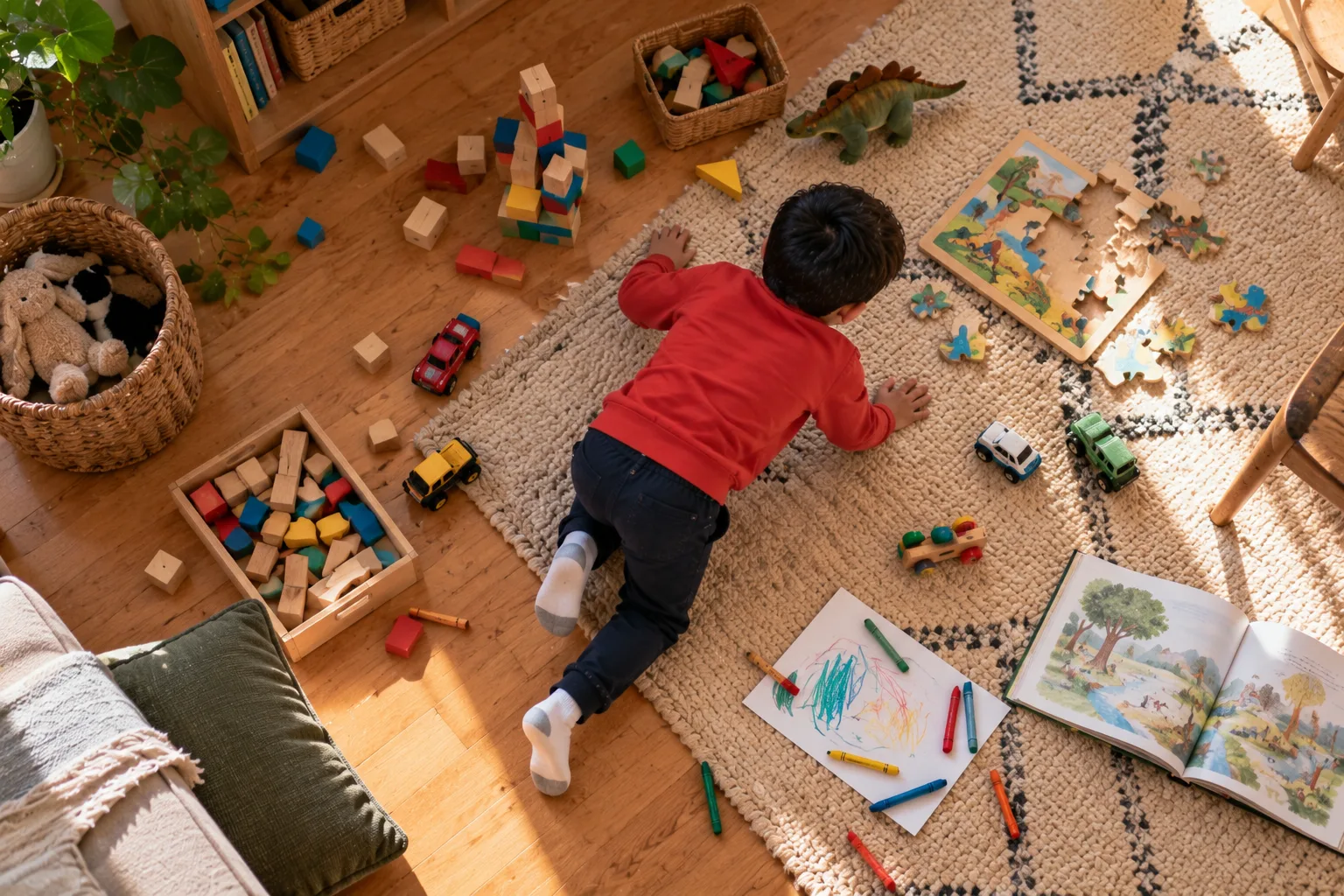
How to tell which it is
A week or two of quiet watching often tells you more than any advice can.
- Does movement make it better or worse? After a good run around, are they calmer and more able to settle, or more wound up?
- Where is it worst? In noisy, crowded places, or in quiet, boring ones?
- What pulls them away? A sound or something they saw, someone coming close, or nothing you can spot?
- Can they stick with things they love? How long do they last with a favourite activity, compared with something you chose?
- What happens when you show them? Do they settle once you sit beside them and do the first step together?
What tends to help
Match the help to the reason. Here is where to start.
If the body needs waking up:
- Build in movement before sitting: a run in the garden, jumping, or a race to the door and back.
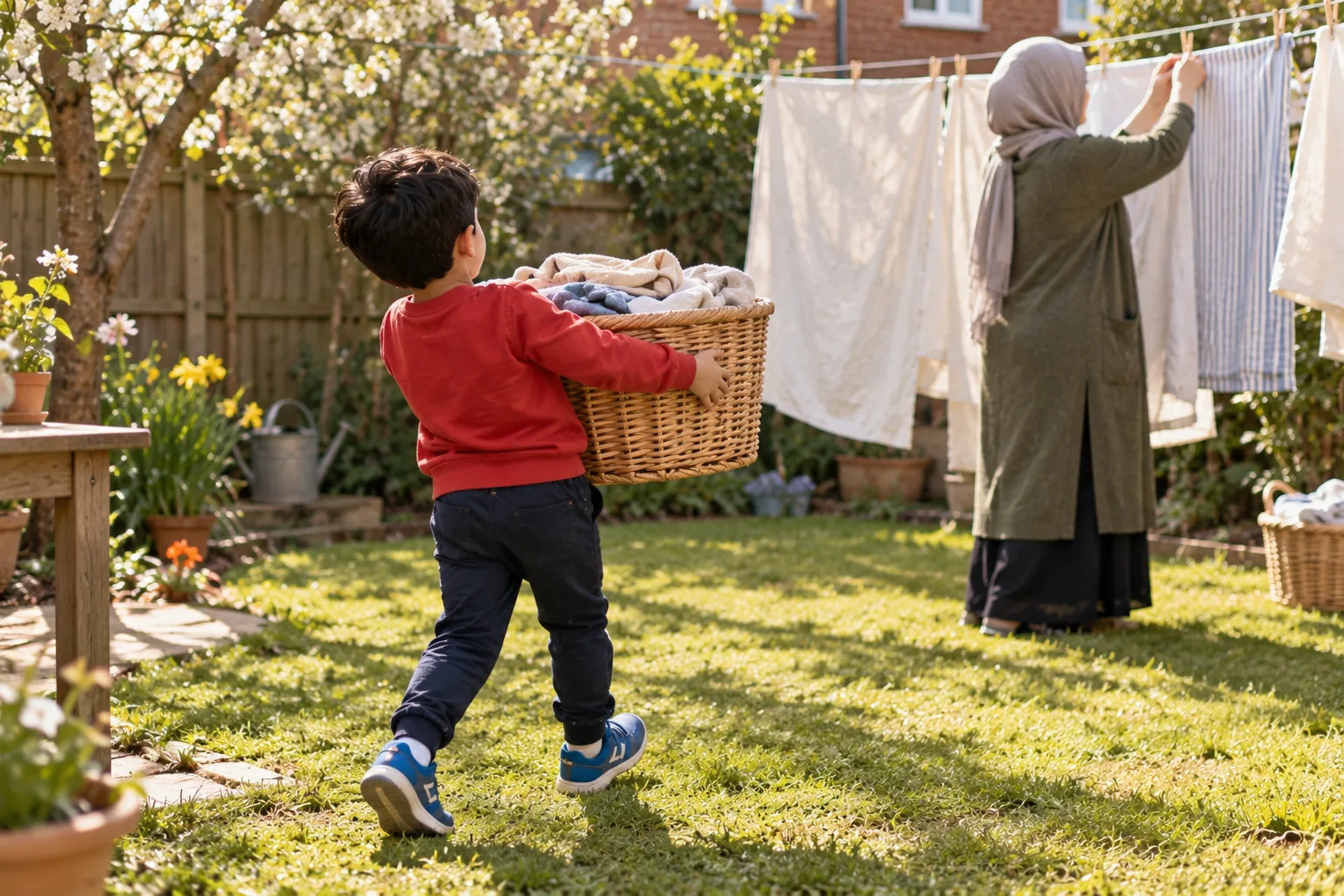
- Give them useful jobs with a bit of weight, like carrying the shopping, pushing a laundry basket or wiping the table.
- Offer short movement breaks rather than waiting for things to fall apart.
If something feels uncomfortable:
- Let them sit at the edge of a group, with their back to a wall, so nobody surprises them from behind.
- Let them see you coming before you touch them.
- After a busy time, offer something slow and steady: rocking, a firm hug, or a small quiet space like a tent or under a table.
If everything is calling at once:
- Clear the table of everything except the one thing you are doing, and turn off the TV in the background.
- Put toys away in closed boxes and bring out one at a time.
- Choose a seat facing a plain wall rather than a window or a busy shelf.
If they are not sure what to do:
- Give one short instruction at a time, and show rather than tell.
- Use a picture or a real example: "We're making one like this."
- Sit beside them for the first step, and make the task small enough to finish.
For every child: Notice and name the moments that go well. "You stayed for the whole story today" means a lot more than the hundredth "sit down."
When to look for more support
It is worth talking with your child's doctor or another professional who can see your child in person if:
- the restlessness makes daily life hard in most places, at home as well as at daycare or school
- your child often runs into danger, like towards roads, without seeming to notice
- they sleep poorly, snore a lot or seem tired most of the time
- they often seem not to hear you, or you wonder about their hearing or eyesight
- they seem unhappy, frustrated or start to say they are "bad"
- it has been going on for months and nothing you try seems to help

A child who cannot sit still is rarely trying to make your day harder. Their body or their mind is doing its best with what the moment feels like to them. Once you know which kind of restless you are looking at, you can stop repeating "sit down" and start giving them what they actually need. Quite often, that is what finally helps them stay.