Why Does My Child Cry Every Time I Wash Their Hair?
Bath time is fine until the hair wash starts. Two children, two possible reasons behind the same tears, and gentle ways to make it easier.
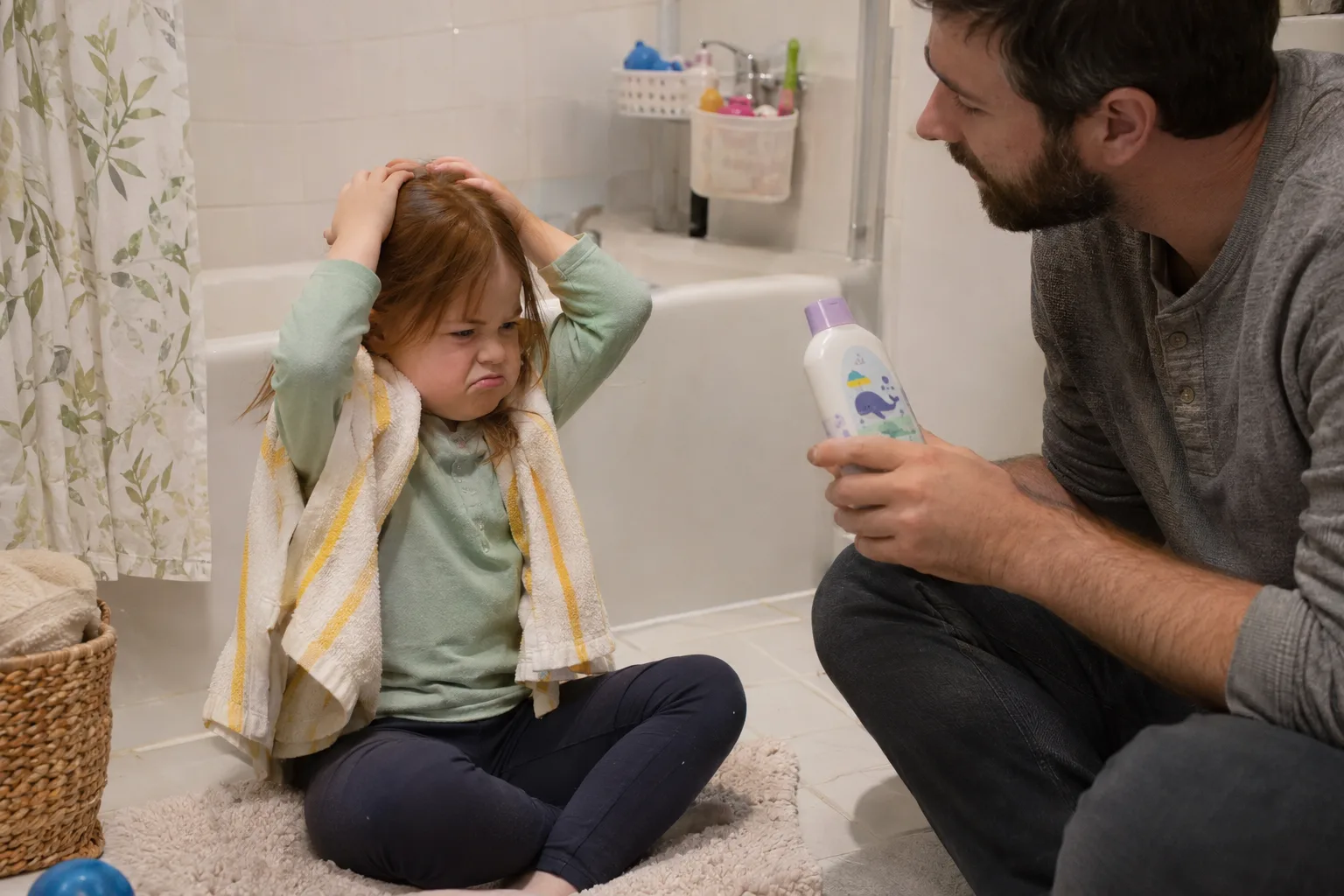
The bath part went fine. Splashing, toys, nobody upset. Then you reach for the cup and say it's time to wash their hair, and everything falls apart. Crying, twisting, hands grabbing at the edge of the tub.
Night after night it can be the hardest five minutes of the day. And it's confusing, because they clearly don't mind water in general.
I couldn't find any research that counts how many young children cry at hair washing in particular. So I can't tell you how common it is. What I can say is that the crying can look the same from the outside and still come from quite different places. I'm going to describe two children. Watch for one small thing as you read. When does the crying start?
The first child cries the moment the water touches
She's four. She sits fine while you get things ready. She doesn't flinch at the sight of the cup. Then the water runs over her head, your fingers start rubbing in the shampoo, and that's when she cries.
For some children the feeling itself may be the problem. Fingers moving on the scalp, warm water running down the neck. For most of us that's ordinary, even pleasant. For some children it may land much more strongly.
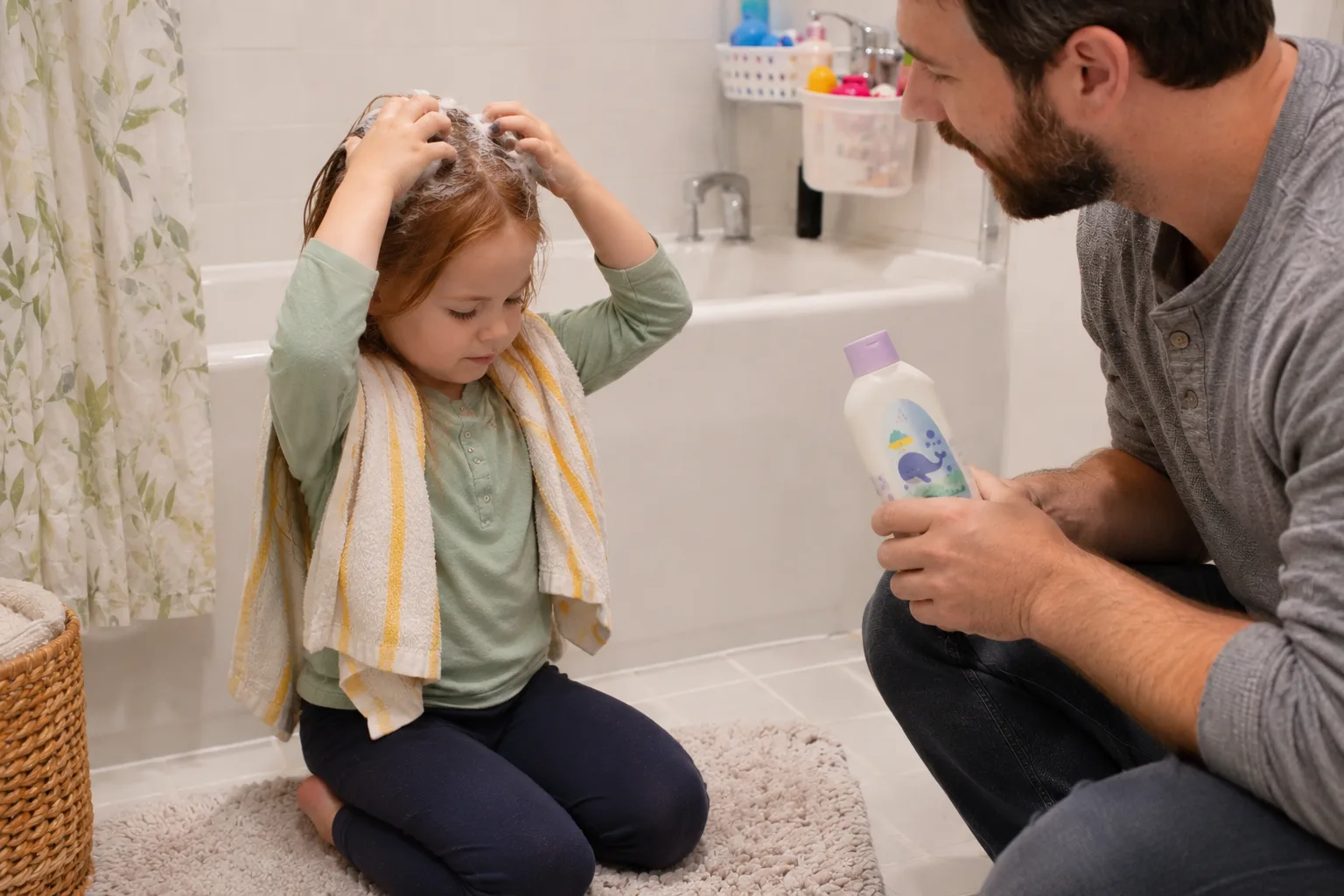
When children touch themselves, it usually feels less threatening and less uncomfortable than when someone else does it. Their own touch tends to come across as information, a way of telling how something feels.
So for a child like her, let her rub the shampoo in herself. She controls how hard, and she knows exactly when it's coming.
If she can't manage it on her own yet, tell her what's next before you do it. "Now I'm going to rub." Then rub.
Use firm, steady pressure. Light, tickly touches can feel worse.
The second child cries before the water arrives
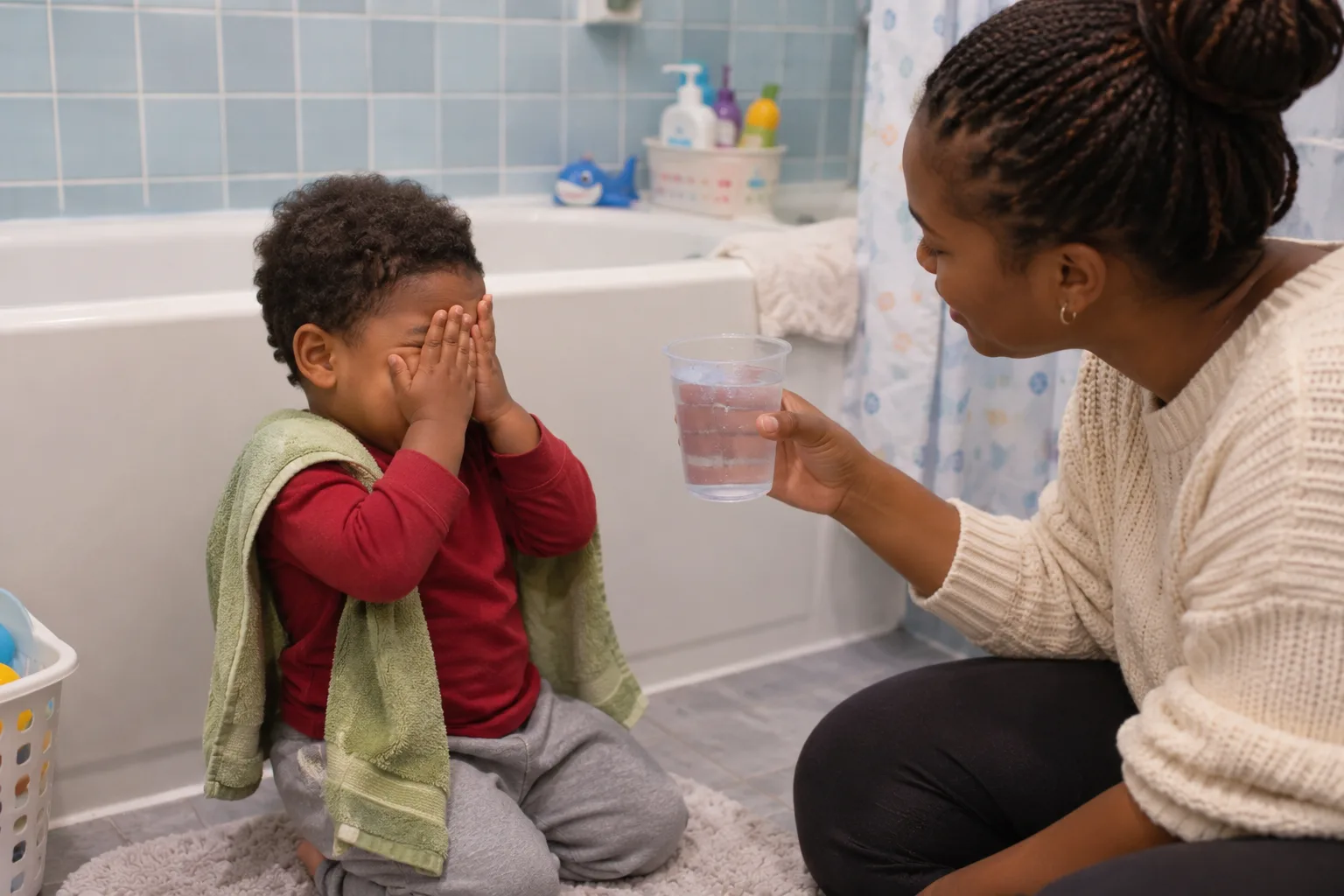
He's three. He sees you pick up the cup, or hears the shower go on, and the crying starts. No water has touched him yet. Often the rest of his body is fine with water. It may be water running down over his face that he dreads.
Most of what we know here comes from research on children who are afraid of water in general, swimming pools and so on. In one study of children who had been brought for help with a fear of water, more than half of the parents said their child had been afraid from the very first time they met water. So it may not come from one bad experience, and it isn't something you caused. Another study, comparing children aged five to eight, found that fear of water in younger children went together with fears of the unknown and of danger.
For a child like him, go slowly, one small step at a time.
- Start with a damp cloth on the hair, then a little water on the back of the head, then a bit more.
- Stay at each step until it feels easy, then move on.
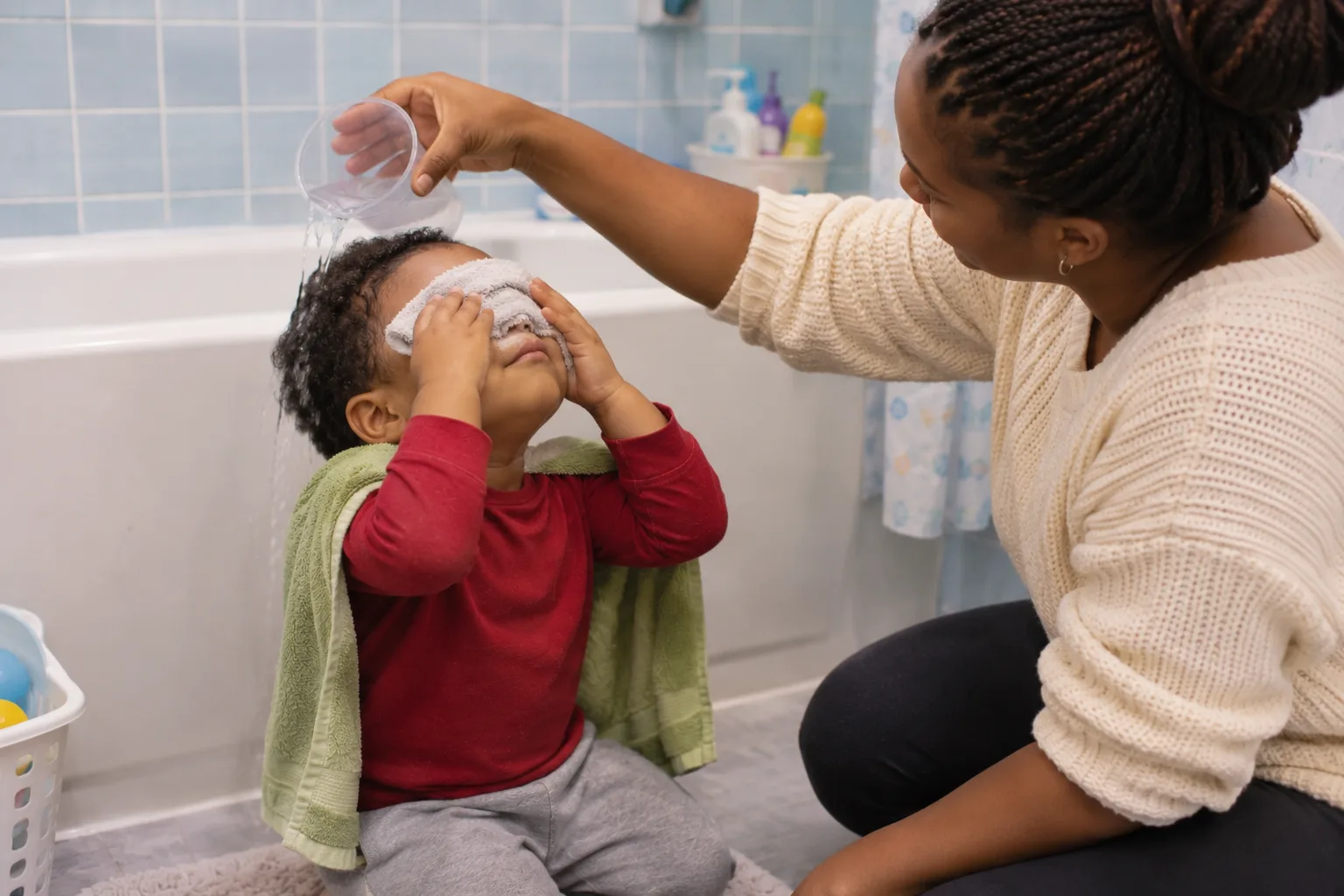
There's some research behind going slowly. In a randomised trial with children aged three to eight who were afraid of water, practising with real water bit by bit helped. Trying everything at once didn't work any better than going slowly, and it was harder on the children. So holding a child still to get it over with quickly may not be the best idea, even on a rushed night.
Which one sounds like your child?
- Does the crying start when the water and fingers touch, or when they see the cup or shower?
- Is it worse when water runs onto their face?
- Do they also dislike labels, nail clipping or face wiping?
- Are they fine with water on their arms, legs and back?
- Is it any easier when they're doing some of it themselves?
If you'd like to understand your child in more detail, I'd suggest trying a Sensory Portrait.
When to talk to your child's doctor
It is worth talking with your child's doctor or another professional who can see your child in person if:
- your child reacts very strongly to lots of everyday sensations, such as clothes, food textures or sounds, not just hair washing
- it's getting worse, or starting to get in the way of other parts of the day like eating or sleeping
- they hurt themselves during it, or hold their breath until their face turns blue
If you have more questions about your child, leave them for me on Instagram at @sensory_portrait or at help@sensoryportrait.com.