Why Does My Child Melt Down When the Tablet Goes Off?
The screen goes dark and the screaming starts. Two children, two possible reasons behind the same meltdown, and what may help each one.

It's raining, it's late in the afternoon, and the tablet has been on for a while. You say it's time and switch it off. Within a second your five-year-old is face-down on the sofa, howling as if something terrible has happened.
Most families who have handed a child a tablet on a long day know some version of this. Busy days happen. Sometimes the tablet is the only reason dinner gets cooked.
What I find interesting is that the meltdown can look exactly the same from across the room and still come from quite different places. So I'm going to describe two children. Yours might be like one of them, or the other, or a bit of both. Or neither.
The first child: the fun stops and nothing comes next
He's mostly fine during the day. He plays, he moves from one thing to another, he isn't especially quick to anger. But the moment the screen goes dark, he falls apart.
Part of it may be the sudden stop. One second he's in the middle of something bright and fast, the next it's gone, and there's nothing waiting on the other side. Think of being pulled out of a film ten minutes before the end and sent to sit in the hallway.
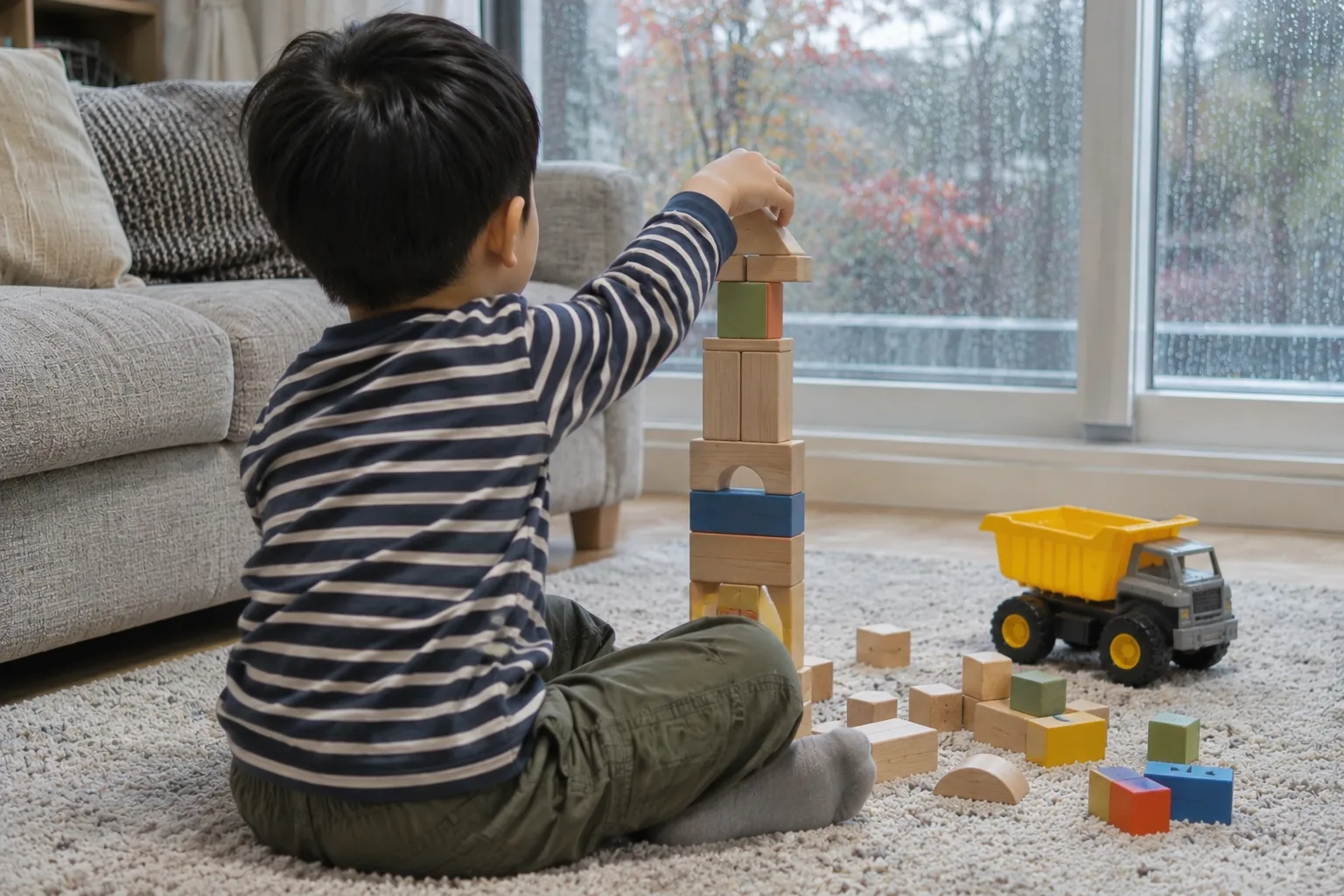
There is some research that fits this, though it doesn't prove it. A 2024 study in Frontiers in Psychology asked the parents of more than 600 children, around six years old on average, about tantrums when screen time ends. Children who spent more time in real play with toys tended to have fewer of them. Play was more closely linked to these tantrums than the children's skills at planning and holding back, which surprised me a little. It was a snapshot taken at one point in time, so it can't tell us which came first.
The second child: the tablet has become a way to calm down
Now picture a three-year-old girl at her grandfather's dinner table. When she's been upset, tired, or stuck waiting somewhere, the tablet has often been what settled her. That makes sense. It works fast, and when you're out or exhausted, fast matters.
Over time, though, it may have become one of her few ways to settle. So when it's taken away while she's already wobbly, she loses the thing she would normally reach for. Calming down gets harder.
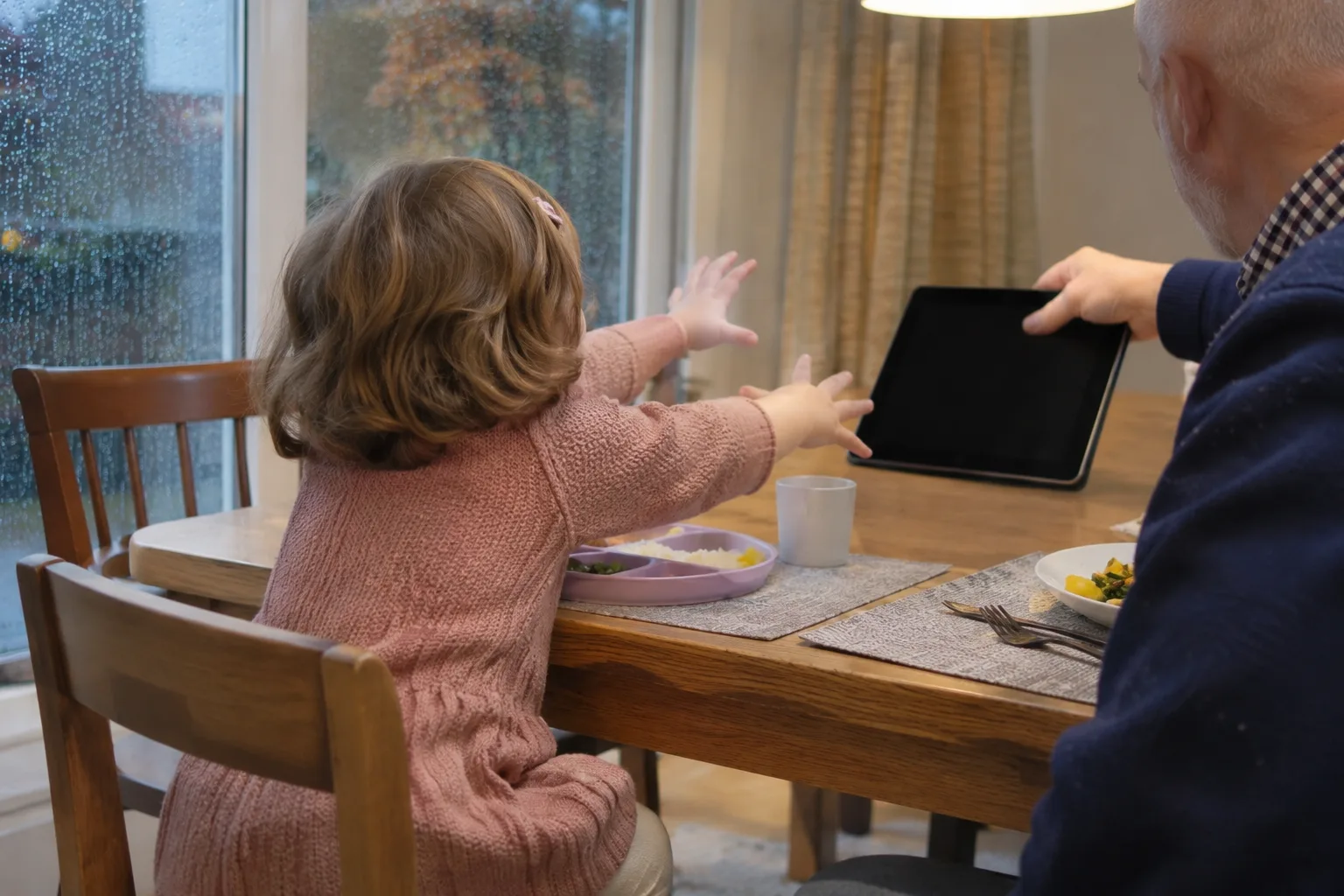
Two studies in JAMA Pediatrics point in this direction. One followed more than 400 children aged 3 to 5 for six months. The more often parents used a device to calm their child when upset, the more the child's emotional reactions tended to grow over that time, especially in boys and in children who were already very active. The other followed about 300 children in Canada, aged three and a half to five and a half, and found that tablet use and anger seemed to feed each other from one year to the next. The effects were small. Both studies watched families without changing anything, so neither can show cause.
Nobody has compared these two kinds of meltdown side by side. So I wouldn't call them two types. They're two ways it might go, and plenty of children have some of each.
Which one sounds more like your child?
- Is your child mostly fine, with the trouble coming right at the moment the screen goes off?
- When the tablet ends, is there something fun ready, or does it end into nothing?
- Is the tablet often what gets used when they're upset, tired or bored?
- When they're upset and there's no tablet, what else helps them settle? Is there much?
- Does a warning beforehand make any difference?
What I'd try
None of these have been tested for switching off a screen in particular. They come from what's generally known about helping young children move from one thing to the next, and about helping them calm down. They may help. You'll know quite quickly whether they do.
For any child
- Give a warning a few minutes ahead. "Two more minutes, then it's going off."
- Keep the ending the same every time. Same words, same order. Some children like pressing the off button themselves.
- Try to avoid switching off out of nowhere, when you can.
- A timer might help. On its own it may not be enough, and some children seem to need a grown-up nearby when it beeps.

Especially for the first child
- Have the next fun thing ready before the screen goes off. A truck on the rug, a snack, a game you start together.
- Let the end of the tablet lead somewhere. Going to something is easier than just stopping.
Especially for the second child
- Slowly add other ways to calm down. A long hug, a quiet corner with cushions, a soft toy, a song you always sing together.
- Practise them on calm days, so they're familiar when they're needed.
- Where you can, keep the tablet for times when she isn't already upset. On hard days you'll still use it, and that's fine.
When to talk to your child's doctor
It is worth talking with your child's doctor or another professional who can see your child in person if:
- outbursts happen several times a week and have gone on for months
- they happen in lots of places, at home, at nursery, with other people, whether or not a screen is involved
- your child seems cross or irritable most of the time, even between outbursts
- they hurt themselves or other people during outbursts

The boy on the sofa and the girl at the table are crying about the same dark screen. He may be missing what comes next. She may be missing her way of calming down. Which one sounds more like yours?