Why Won't My Child Eat Food That Touches Other Food?
The peas touched the rice, and now dinner is over. What we know and don't know about this, why it may happen, and calm ways to help at the table.
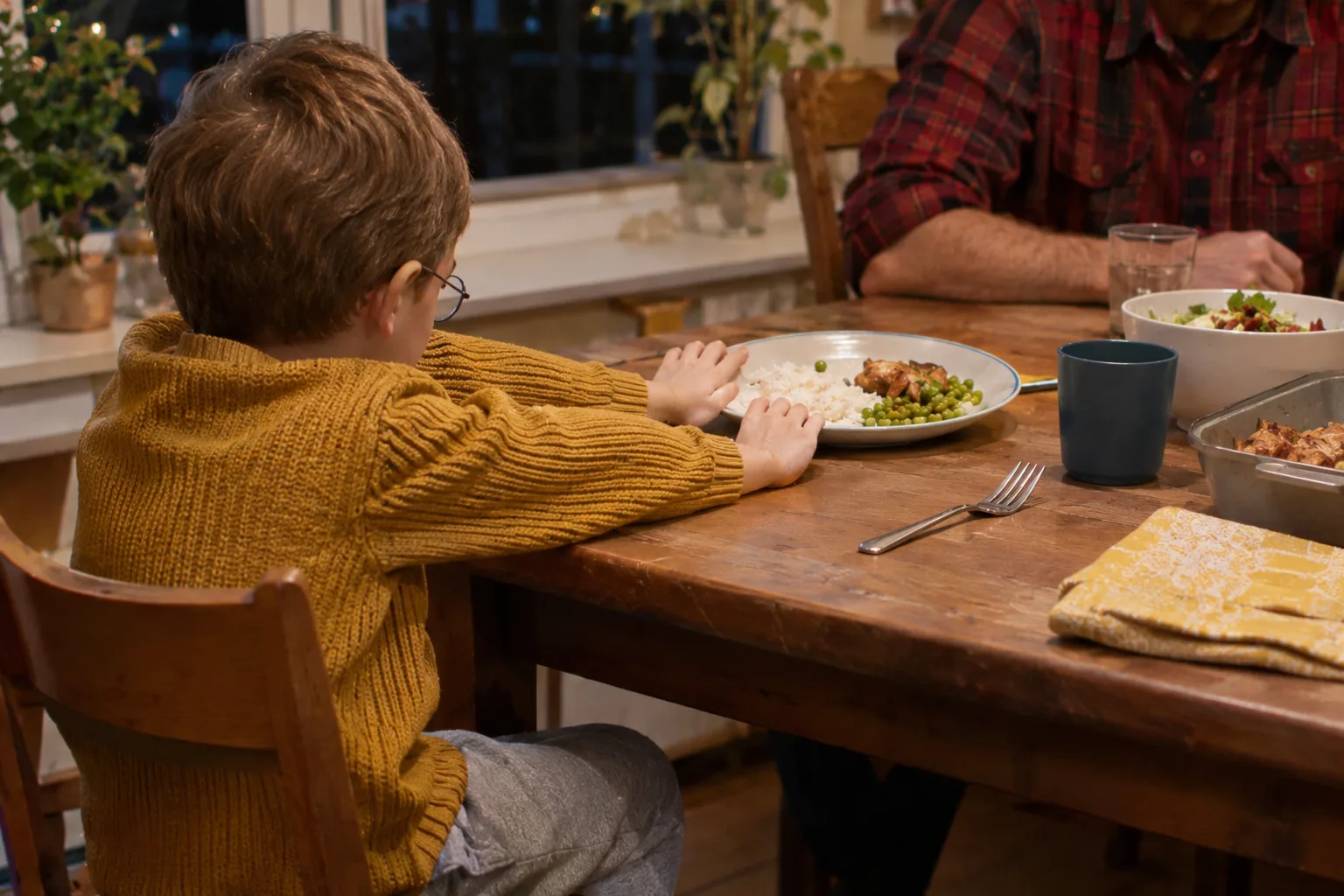
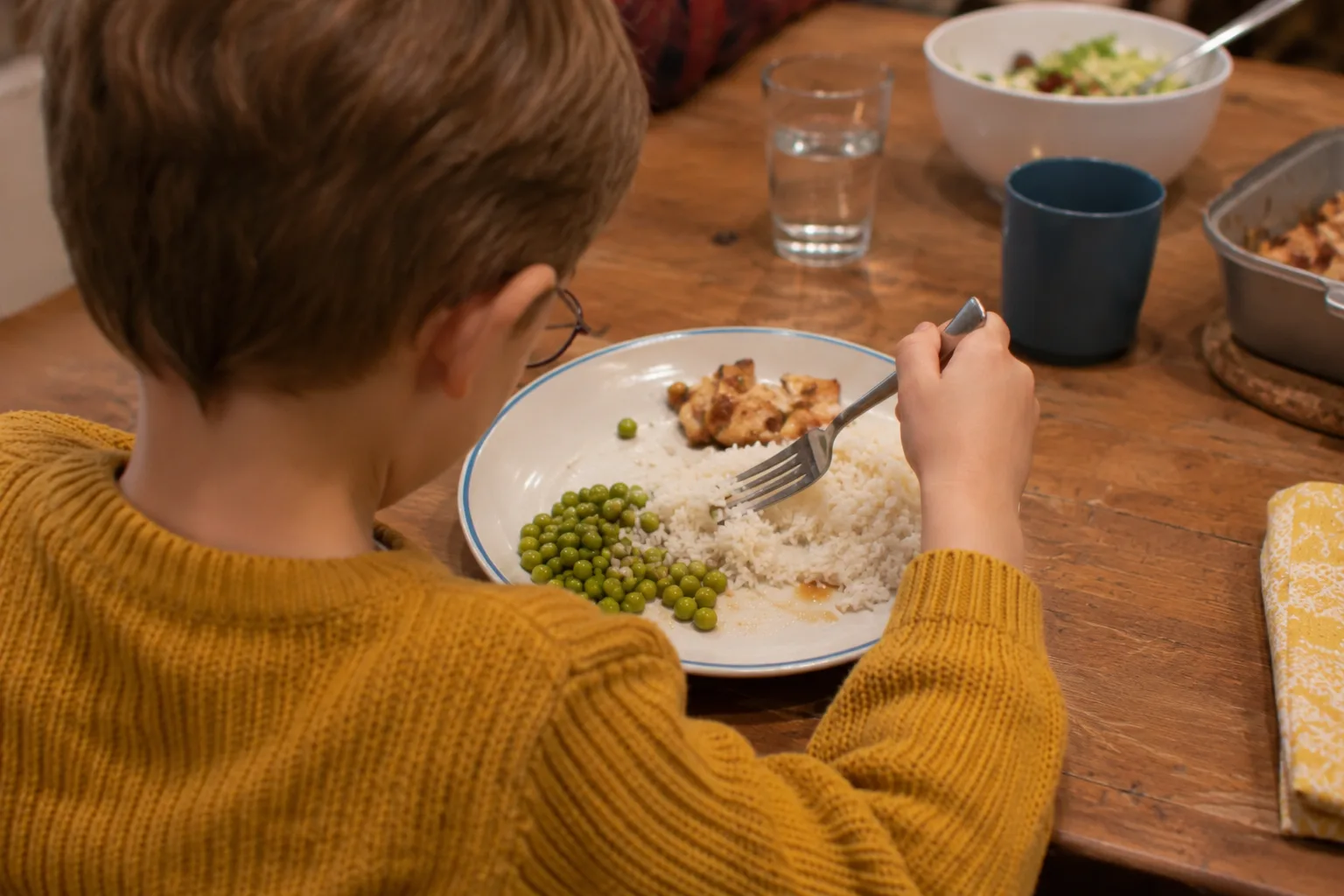
You put dinner down. Rice, chicken, a little pile of peas. Your child looks at the plate, sees that one pea has rolled into the rice, and pushes the whole thing away. They aren't going to eat any of it now. Not the rice, not the chicken, nothing.
It can feel baffling. It is the same food it was a second ago. And after the effort of cooking, it is hard not to feel frustrated, or to worry about whether they are getting enough to eat.
What we know, and what we don't
Here is the honest answer first: we could not find any research that measures how many young children refuse food because it touched, or how this changes with age. So nobody can tell you exactly how common it is, or how long it usually lasts.
What we do have comes from the wider research on picky eating.
This reaction has been described. A 2020 scientific statement from the American Heart Association on children's eating describes how some children may refuse a whole meal when a food they dislike touches other food on their plate. So you are not imagining it, and you are not the only family dealing with it.
Picky eating often passes. A large study from the Netherlands, which followed children over several years, found that picky eating faded for many of them as they got older. That is encouraging, but it is not a promise for any one child, and it doesn't mean you have to simply wait.
Why it may happen
It can look like plain fussiness. It may not be. The ideas below are possibilities, not proven explanations.
Some children may be more sensitive to food. Think of biting into something you expected to be crunchy and finding it soggy. For a moment, it is hard to keep eating. Some young children may notice the texture, taste or smell of food more strongly than we do. Sauce from one food seeping into another, or a soft food leaving a wet patch on a dry one, may change the whole mouthful for them.
Some children may like things to be predictable. Some young children seem to feel calmer when things go the way they expect, whether that is the bedtime story, the route to nursery or the cup they drink from. A plate where everything sits in its own place may be part of that. This idea has less research behind it for children aged 2 to 6, so treat it as something to keep in mind rather than a firm answer.
What to watch for
A few days of quiet noticing may tell you more about your own child:
- Is it every food, or only some? Maybe dry foods are fine together, but anything with sauce isn't.
- Does it matter which food did the touching? Is it worse when a food they dislike touches one they like?
- Will they eat it if they move the food apart themselves?
- Are they more relaxed on days when things are familiar? Or is it worse when they are tired or hungry?
- Do other things need to be "just so" for them, away from the table?
What tends to help
These are general suggestions, not tested answers for this exact behavior, but they are gentle and worth trying.
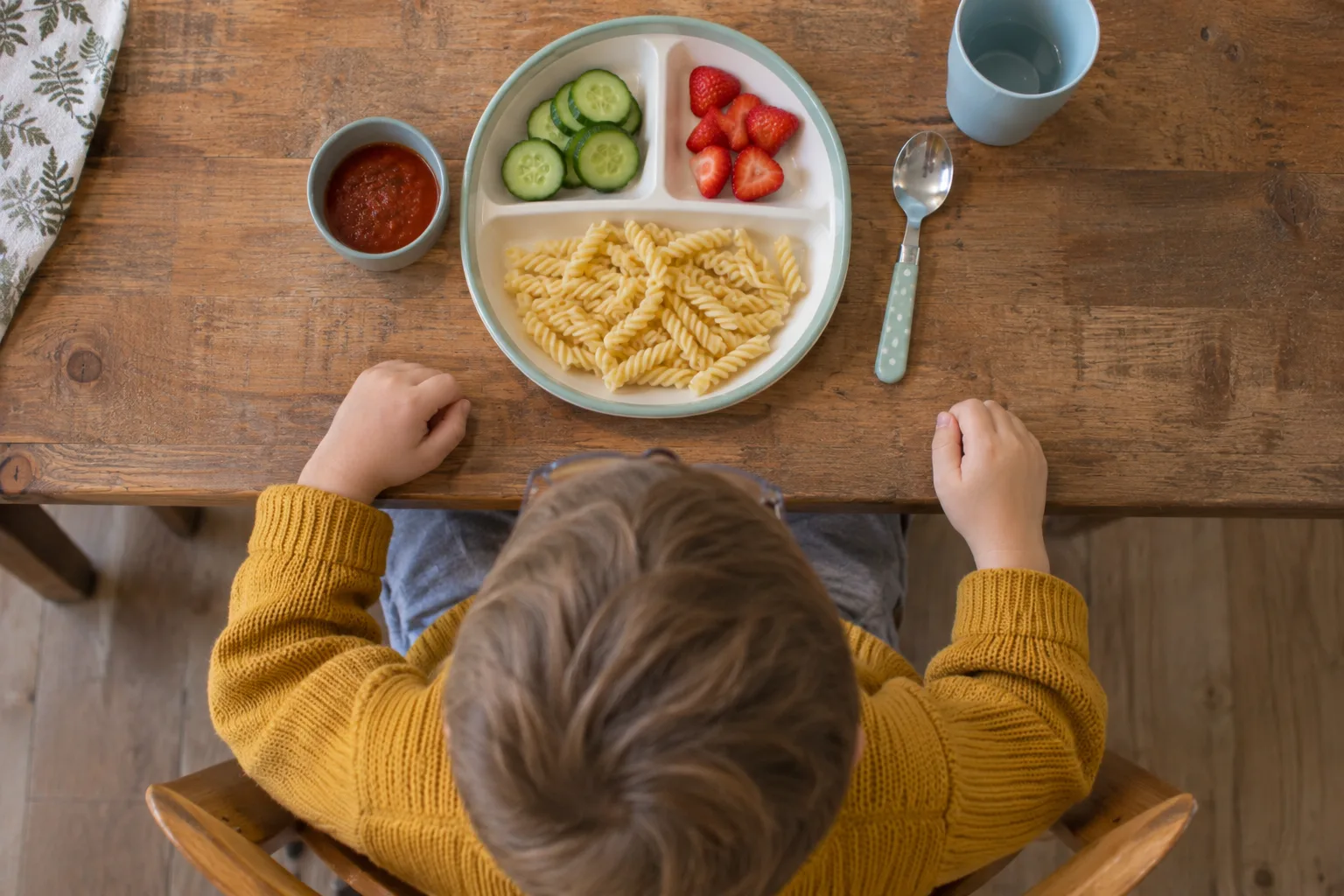
Serve foods apart. A divided plate, or small separate bowls, lets each food keep to itself. This isn't giving in. It simply lets the meal start calmly, which is the best starting point for any eating.
- Put sauces and gravy in a little pot on the side.
- Let your child move their own food around if they want to.
- Keep a spare spoon nearby, so a stray pea can be moved rather than ending the meal.
Include one food they already like. When a new or less-liked food is on the table, serve it alongside something familiar that they usually eat. That way there is always something on the plate that feels safe.
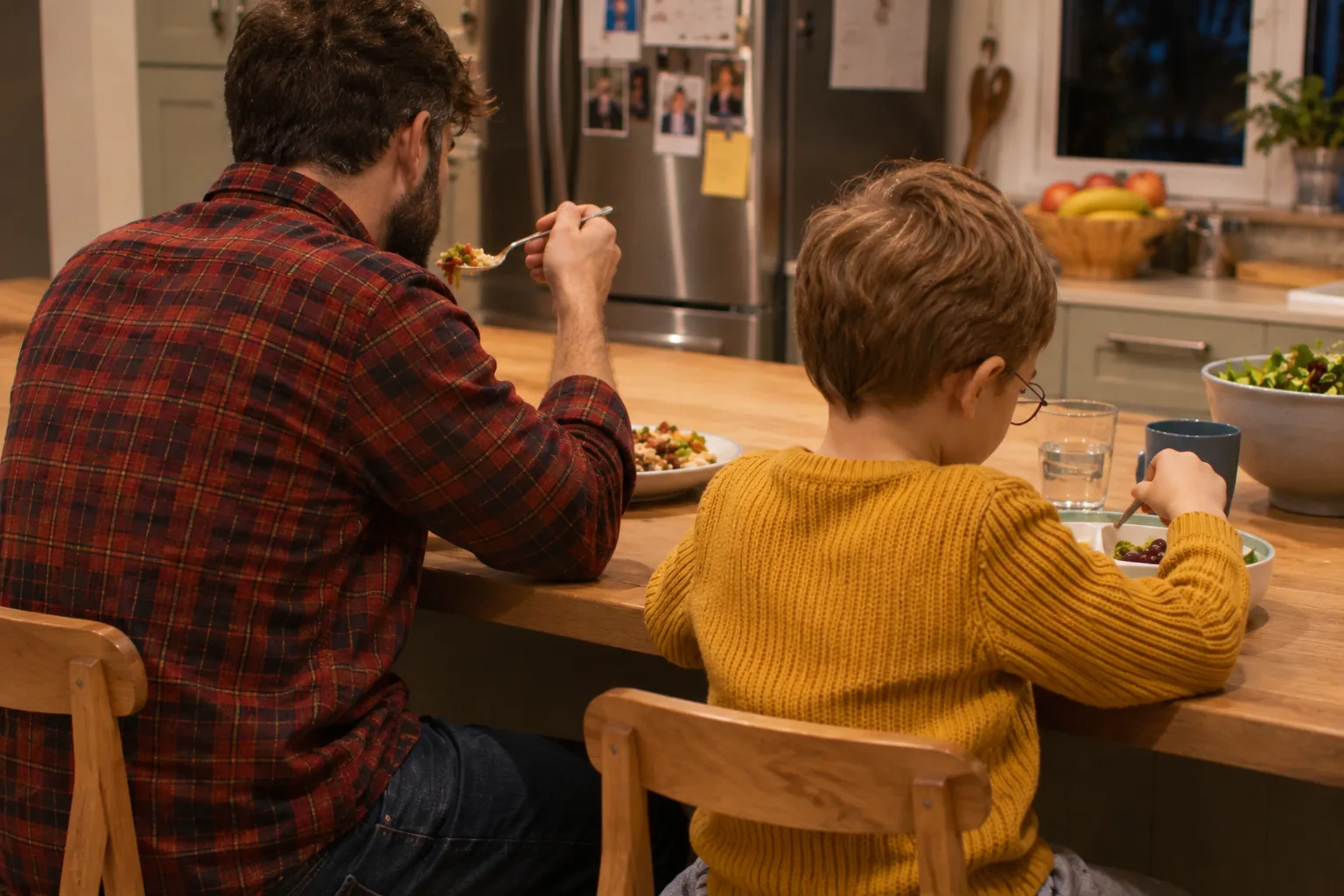
Eat together, calmly. Sit down and eat the same foods yourself, without making a show of it. Let your child see you eat a mixed-up forkful and carry on chatting. Children learn a lot about food just by watching the people they love eat it.
Try skipping "just one bite." It is one of the most natural things a parent can say. But pressure to eat doesn't seem to help, and it can make meals tenser for everyone. One long-running study found that picky eating and pressure to eat affected each other, and that the stronger link went from the child's picky eating to parents pressuring, not the other way round. In other words, pressure usually grows out of a parent's understandable worry. It isn't the cause. Easing off the pressure is simply one thing that is in your hands.
Instead, you can try:
- Letting your child decide whether to eat what is on their plate
- Talking about anything other than how much they have eaten
- Ending the meal calmly when they are done, without bargaining
When to look for more support
It is worth talking with your child's doctor, such as your pediatrician, or another professional who can see your child in person if:
- you are worried about your child's weight or growth
- the range of foods they will eat keeps getting smaller
- the refusing carries on and mealtimes are very hard for your family

A child who won't eat food that has touched isn't trying to ruin dinner. Something about that plate has stopped feeling right to them. A divided plate, a familiar food, and a calm table won't fix everything overnight, but they can make each meal a little easier for both of you.