Why Does My Child Gag on Banana but Not Crackers?
One soft bite and your child gags, yet crunchy crackers go down fine. Two common reasons behind gagging at ages 2 to 6, and calm ways to help each.
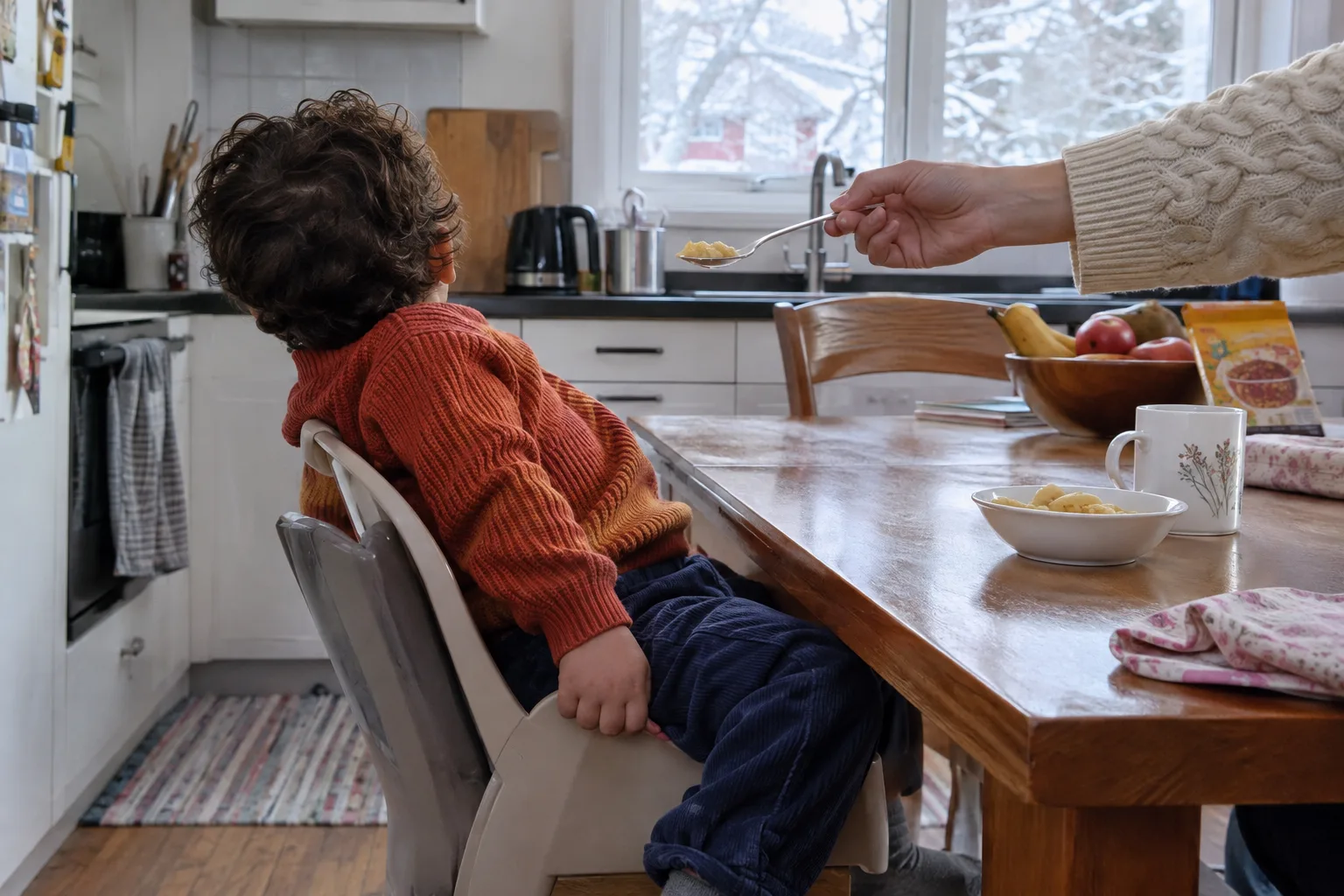
You mash the banana, because banana is about the softest food there is. Your three-year-old sees the spoon coming and pulls back hard. A retch. Sometimes it happens before the food has even reached his tongue.
Ten minutes later he's on the rug, crunching through a pile of crackers like nothing happened.
From the outside it makes no sense. Soft should be easy. Gagging at mealtimes is something a lot of families with young children run into, though, and it doesn't always happen for the same reason. Two children can gag at the same kind of meal for quite different reasons. And the reason changes what helps.
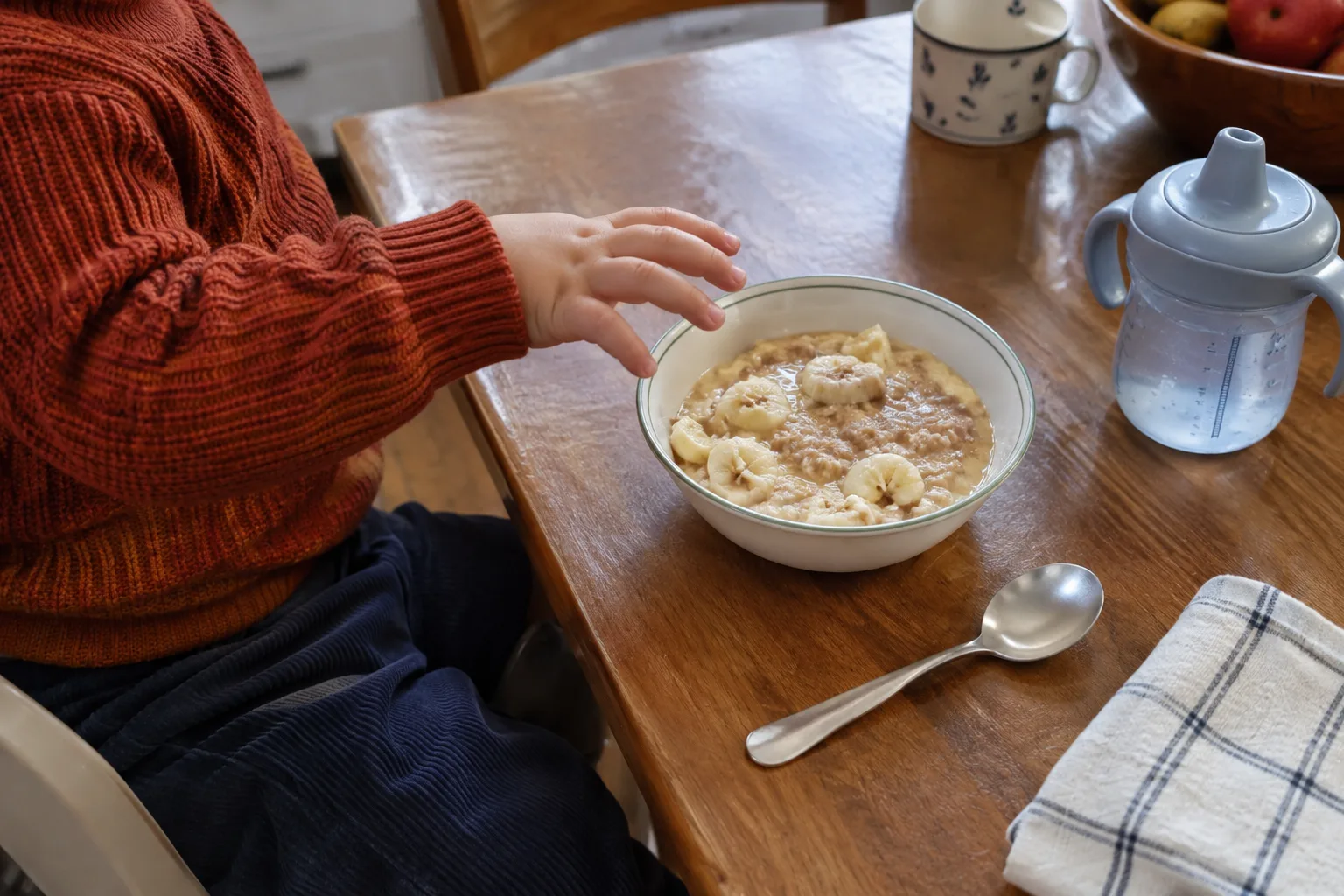
Gagging and choking are not the same
This is worth knowing first, because it changes how worried you need to be in the moment.
Gagging is noisy. Your child is breathing. They may cough, splutter, make retching sounds or push the food back out. It looks dramatic and is usually over quickly. It's the body's way of moving something back towards the front of the mouth.
Choking is often quiet. A child who is choking may not be able to cry, talk or cough properly, and their lips may start to turn blue. That is an emergency. Call for emergency help and start first aid straight away.
Knowing the two apart won't make a gag pleasant to watch. It can make it a little less frightening.
Same gag, two different children
A widely used guide for doctors on children's eating, published in the journal Pediatrics in 2015, sorts feeding difficulties into a few kinds. Two of them fit gagging well, and they look surprisingly different once you know what to watch for.
The first child: it's the feel of the food. Go back to the boy with the banana. He gags when certain foods touch his lips, sometimes just from seeing them on the spoon, sometimes before he has chewed at all. And only some textures do it. Slippery, mushy, lumpy. Crackers, dry toast and rice cakes are no trouble.
Most adults know a smaller version of this. You take a sip of a smoothie you thought was smooth and find a lump. There's a tiny flinch. For some children that flinch is much bigger, and it seems tied to how the food feels in the mouth, not to whether they can manage it.
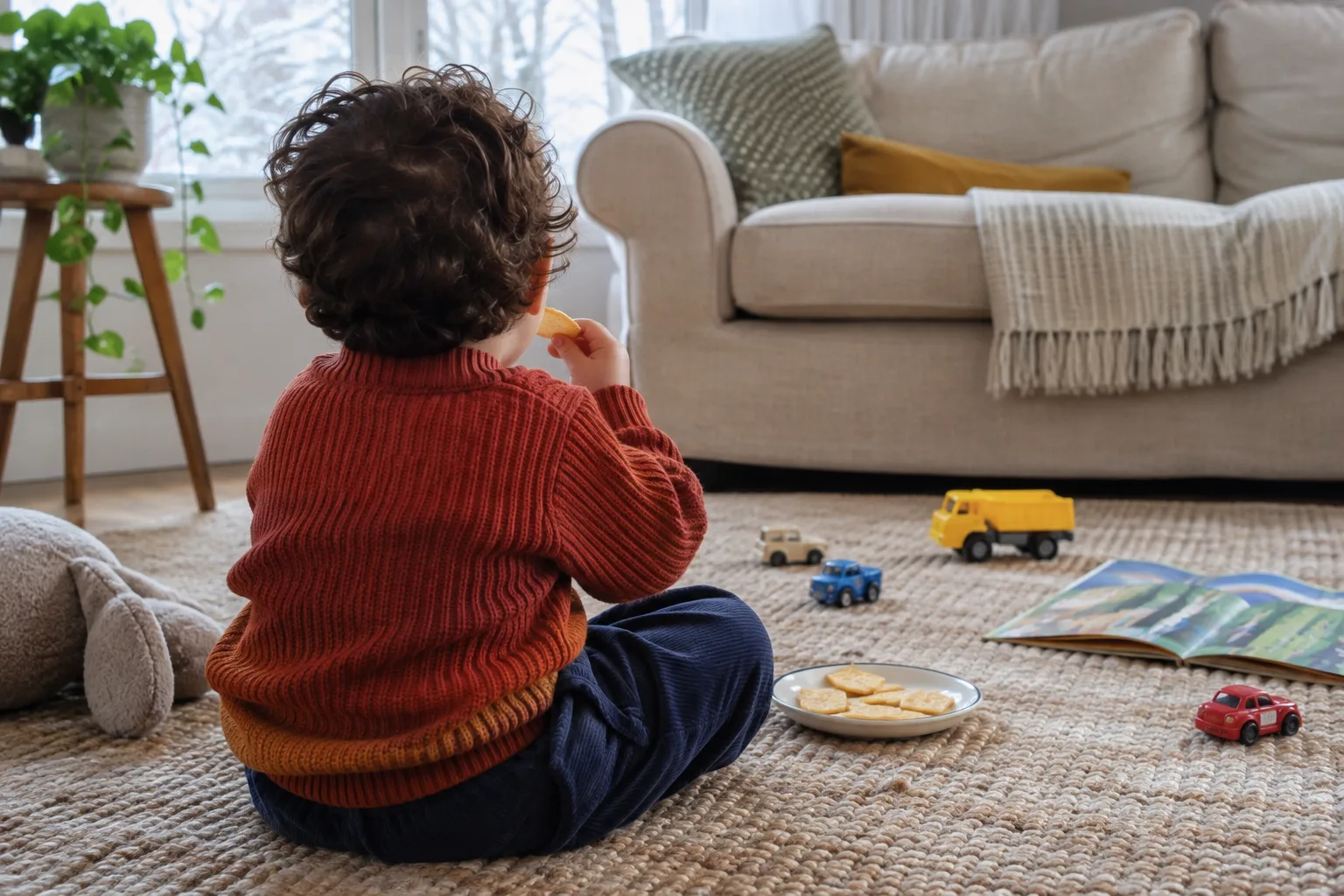
The second child: chewing is still being learned. Now picture a four-year-old girl at a different table. She takes the bite without fuss and starts to chew. Then, as the piece gets harder to move around, she gags. It isn't one particular food. It's most things that need real chewing. A piece of chicken, a slice of raw apple, a crusty roll.
Chewing is a skill, and it keeps developing right through the early years. Moving food from side to side, grinding it down, gathering it into something small enough to swallow. Studies that follow how children chew at different ages show that this keeps maturing well past the toddler stage. A child who is still getting there can hit the edge of what they can manage, and the gag sends the food back.
One related finding, offered gently. A large UK study that followed about 7,800 children found that those who first had lumpy foods after 10 months of age were eating fewer kinds of fruit and vegetables at 7 and had more feeding difficulties. It didn't measure gagging. And babies start lumps later for all sorts of good reasons: illness, being born early, simply not being ready, or advice that has changed over the years. Nobody is to blame. What it does suggest is that chewing practice matters, and practice can carry on at any age.
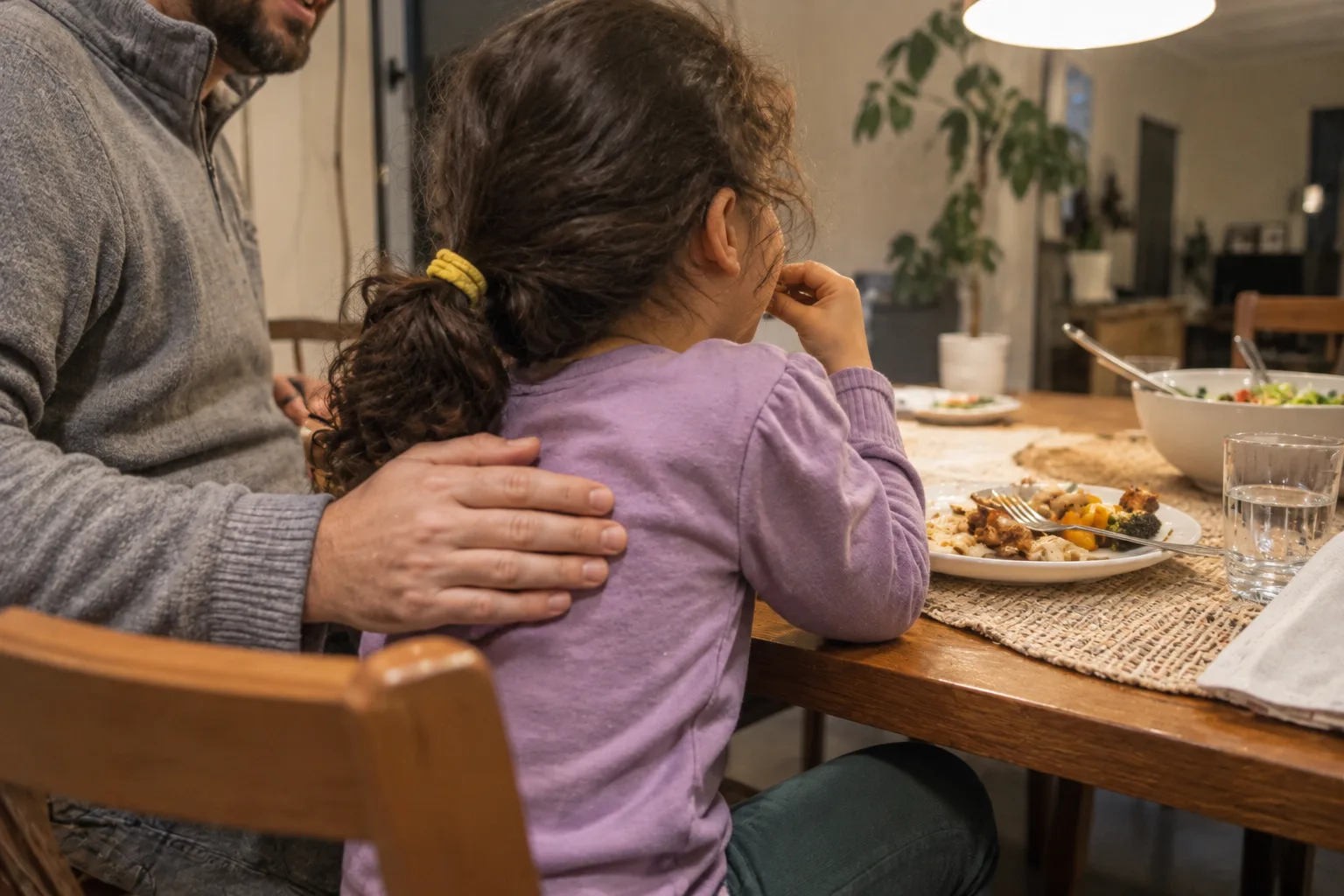
Plenty of children are a bit of both. It's not always easy to tell which one is leading, and that's fine. Noticing is enough to start.
Which one sounds more familiar?
A week of watching meals can tell you a lot.
- When does the gag come? At the sight or first touch of the food, or partway through chewing?
- Which foods? A handful of particular textures, or most foods that need chewing?
- Crunchy foods? Fine with crackers and toast, or trouble there too?
- Mixed textures? Is a smooth yogurt fine but the same yogurt with fruit pieces a problem?
- Hands first? Does touching or playing with the food before eating change anything?
Things to try
None of these have been tested as a fix for gagging in particular. They're gentle steps that may help, and you can stop any of them if your child seems unhappy.
If it seems to be the feel
- Start from a soft food your child already likes, then stir in one very small lump. Keep the change tiny, so the step from familiar to new is small.
- Let them touch, squash and play with new textures before anything goes near their mouth. Hands are often an easier first meeting than lips.
- Let the lump come back out if it needs to. Spitting it out is allowed.
If it seems to be chewing
- Step back to softer versions of the foods that cause trouble. Soft-cooked carrot, flaked fish, well-cooked pasta, scrambled eggs.
- Offer small pieces, one at a time, with plenty of time to finish.
- Keep practice calm and unhurried. The skill grows by being used.
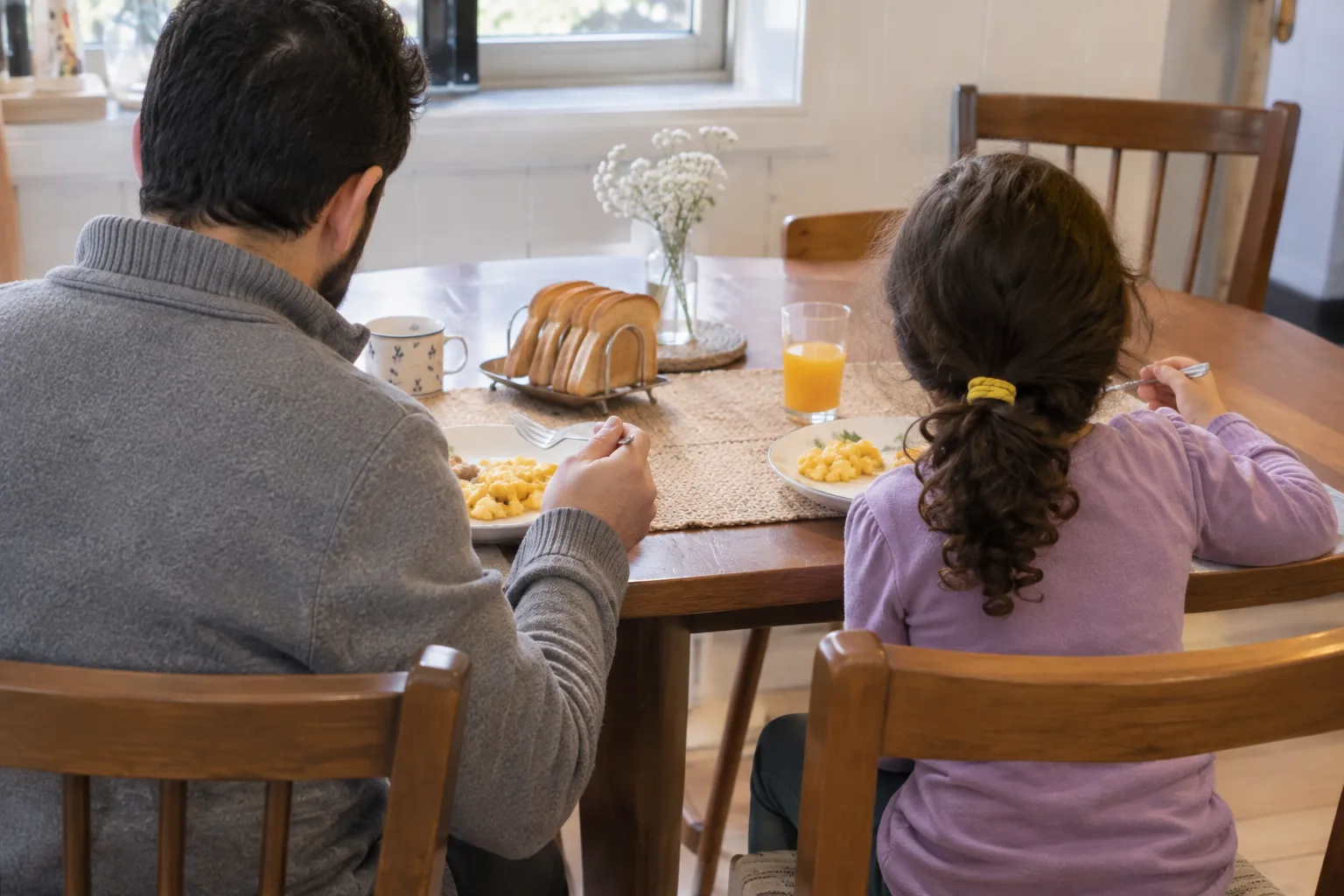
For either child
- Eat together and let your child see you enjoying the food. Children pick up a lot just by watching the people they love eat.
- Skip the hurrying, the rewards for eating and the "just one bite." A 2020 scientific statement from the American Heart Association links pressure, bribes and forcing food with children refusing more. Those studies watched families and can't prove cause, but there's little reason to think pressure helps.
- If a gag happens, keep your own face relaxed. A calm grown-up across the table matters more than it seems.
When to look for more support
It is worth talking with your child's doctor or another professional who can see your child in person if:
- your child often coughs or chokes while eating or drinking
- they can't move on to the textures expected for their age, and they aren't gaining weight well
- they gag at just the sight or smell of food, and the list of foods they'll eat keeps getting shorter
Banana for one child, a piece of chicken for another. The gag looks the same from across the table, and what's behind it can be quite different. Which one sounds more like yours?