Why Does My Child Play Alone and Walk Away When Other Kids Come Close?
Your child plays happily alone, then leaves the moment other children join in. Here is what may be behind it, and gentle ways to make playing together feel easier.
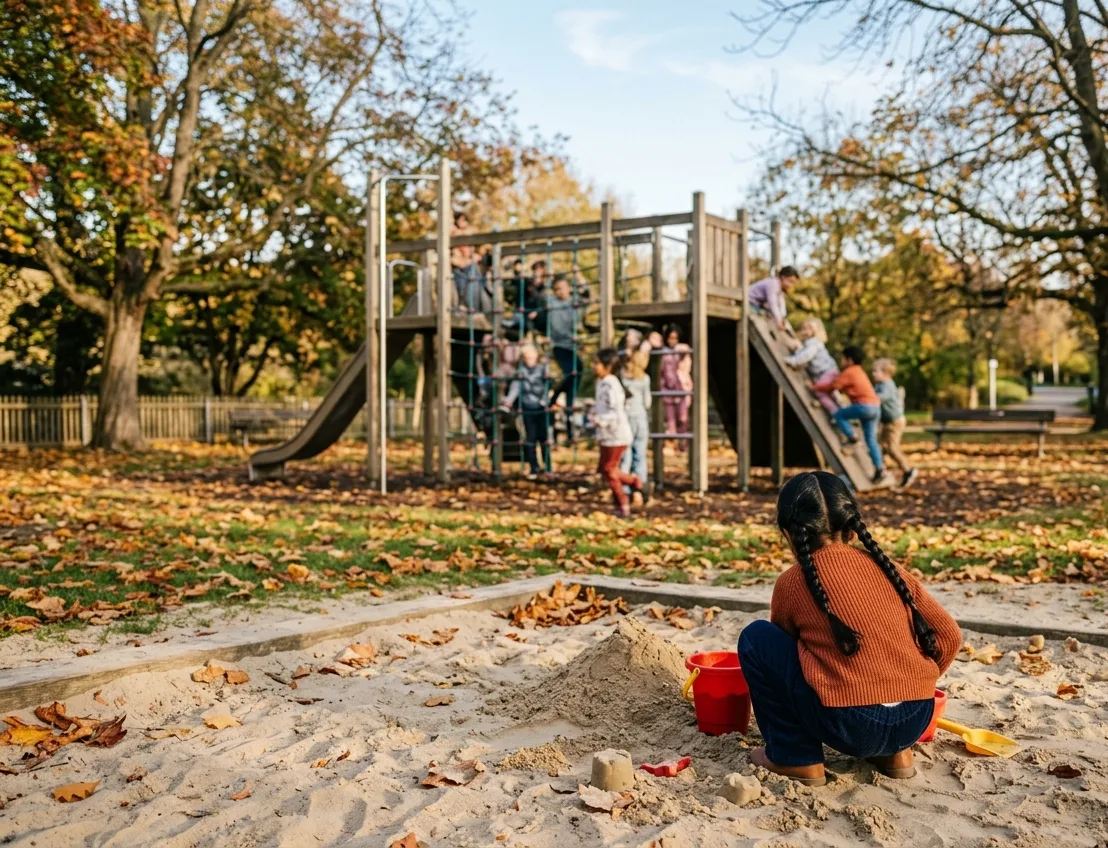
You watch from the bench. Your child is happily filling a bucket with sand, completely absorbed. Then two other children wander over, and within a minute your child has quietly picked up the spade and moved to the far end of the playground. It happens at birthday parties, at daycare drop-off, at the park. And you start to wonder: why won't they play with the others?
First, playing alone is often perfectly fine
Before anything else, a little reassurance. Young children, especially under three, often play next to other children rather than with them. They may watch, copy and enjoy being nearby without joining in at all. Some children are simply more comfortable with one friend than a crowd, and some like to watch for a long time before they join.
So the question is not "Does my child play alone?" It is "Does my child walk away because being close to others feels hard?" That is where it helps to look a little deeper.
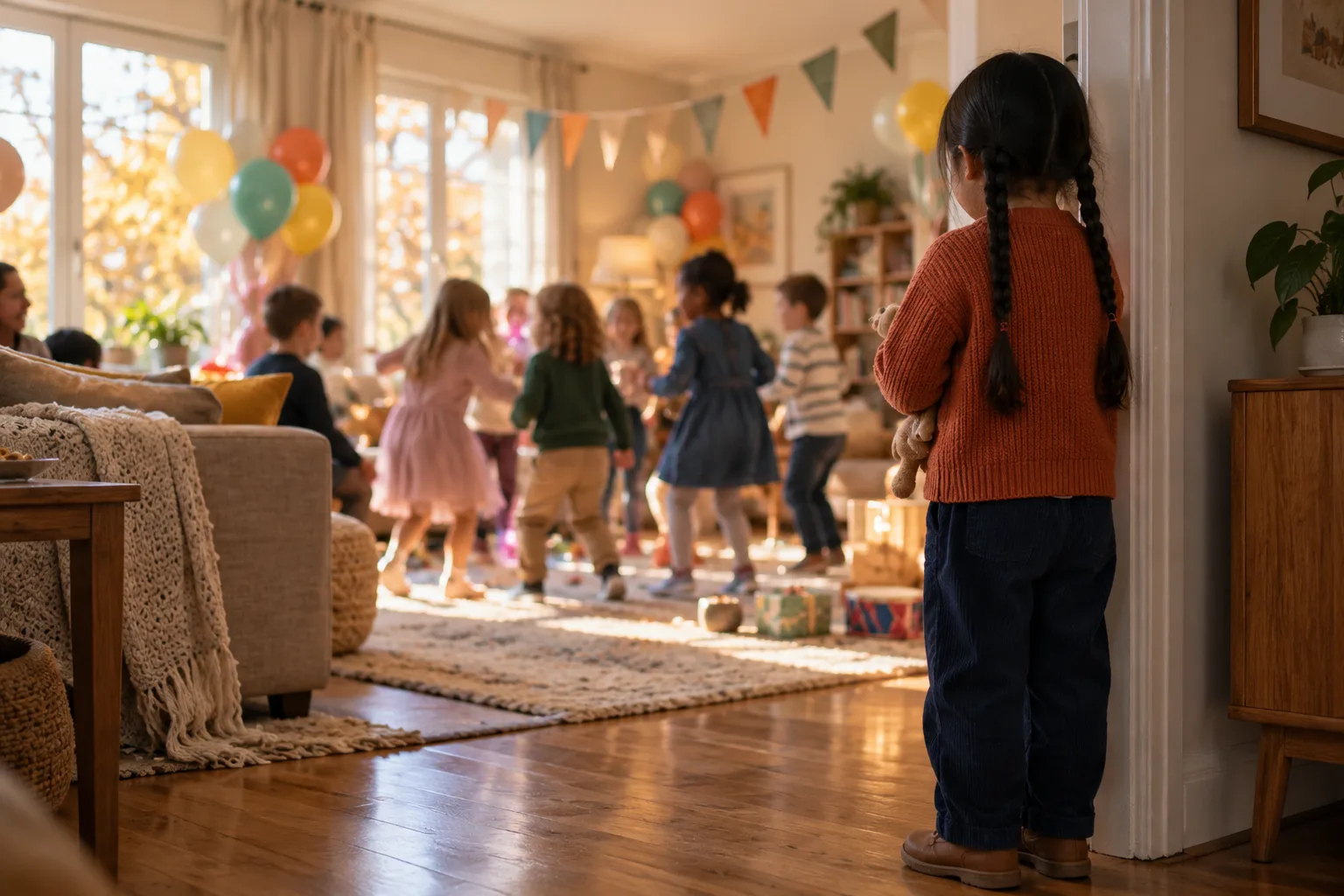
Why being near other children can feel like too much
Bumps and brushes. Groups of young children are close and unpredictable. Someone leans on your back, an elbow knocks your arm, a hand grabs your toy. For a child who feels touch very strongly, each of those brushes can feel startling or unpleasant. Moving away is a simple way to make it stop.
Noise. A room full of children is loud: shouts, squeals, toys clattering, music. Think of trying to read a book while someone scrapes a fork across a plate. Some children find the sound of a busy room so distracting that they cannot settle into play, so they look for somewhere quieter.
Movement everywhere. Our eyes are pulled toward anything that moves, whether we want them to be or not. Some children find it especially hard to tune that out. With children running past on all sides, their attention keeps getting tugged away, and their own game falls apart. Leaving can be a way to get their focus back.
Not sure how to join in. Playing together takes a surprising number of skills: reading what others want, understanding the rules of a game, taking turns, knowing what to say. If those still feel uncertain, a group can feel confusing. And if your child has had a hard moment before, such as a toy snatched or a game that went wrong, they may simply avoid the chance of it happening again.
Many children are a mix of these. Watching quietly for a while can tell you a lot. Do they leave when the room gets loud? When someone touches them? When a game starts to have rules?
What tends to help
Start small and calm. One friend at a time, at home or outdoors with plenty of space, is much easier than a crowded indoor party. Arriving early, before a place gets busy, can help too.
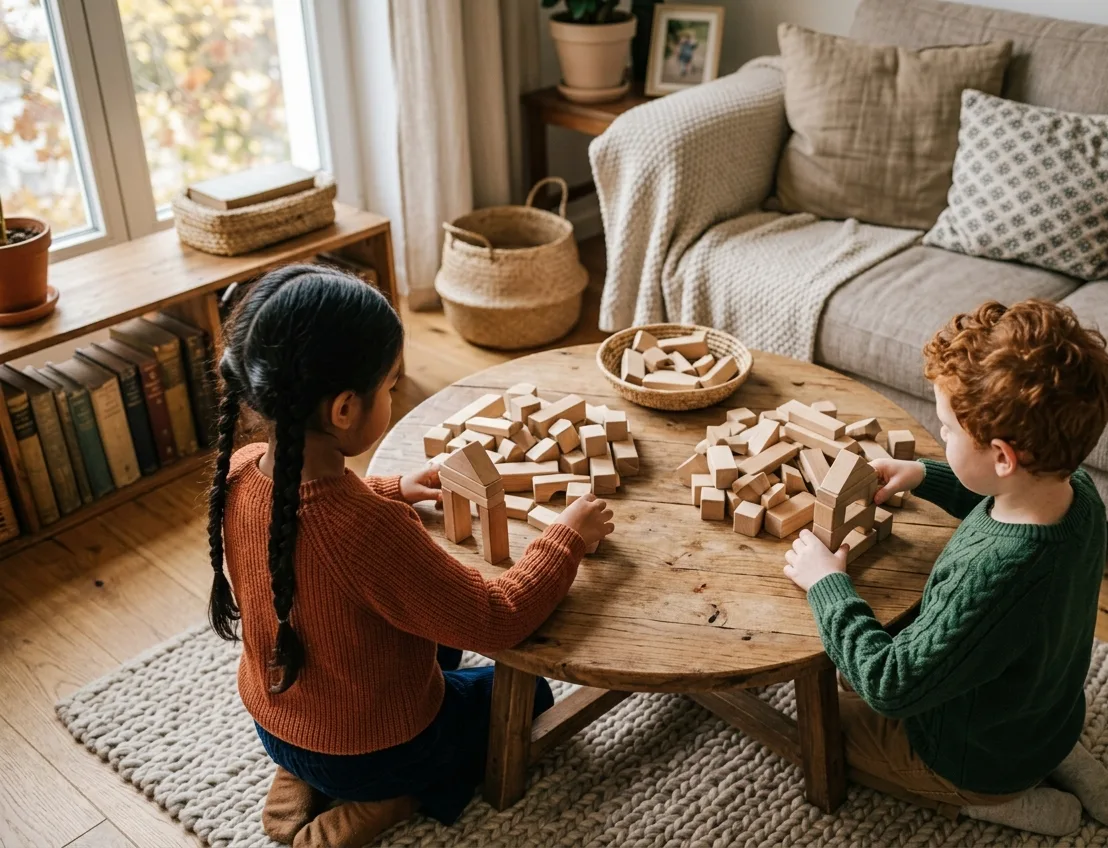
Side by side comes before together. Give two children their own set of the same thing: two piles of blocks, two lumps of dough, two buckets in the sand. No sharing required. Playing near each other comfortably is a real step, not a failure to "play properly."
Let watching count. Standing at the edge and watching is often how a child learns how a game works. Let them do it without pressure, and they may join in on their own when they are ready.
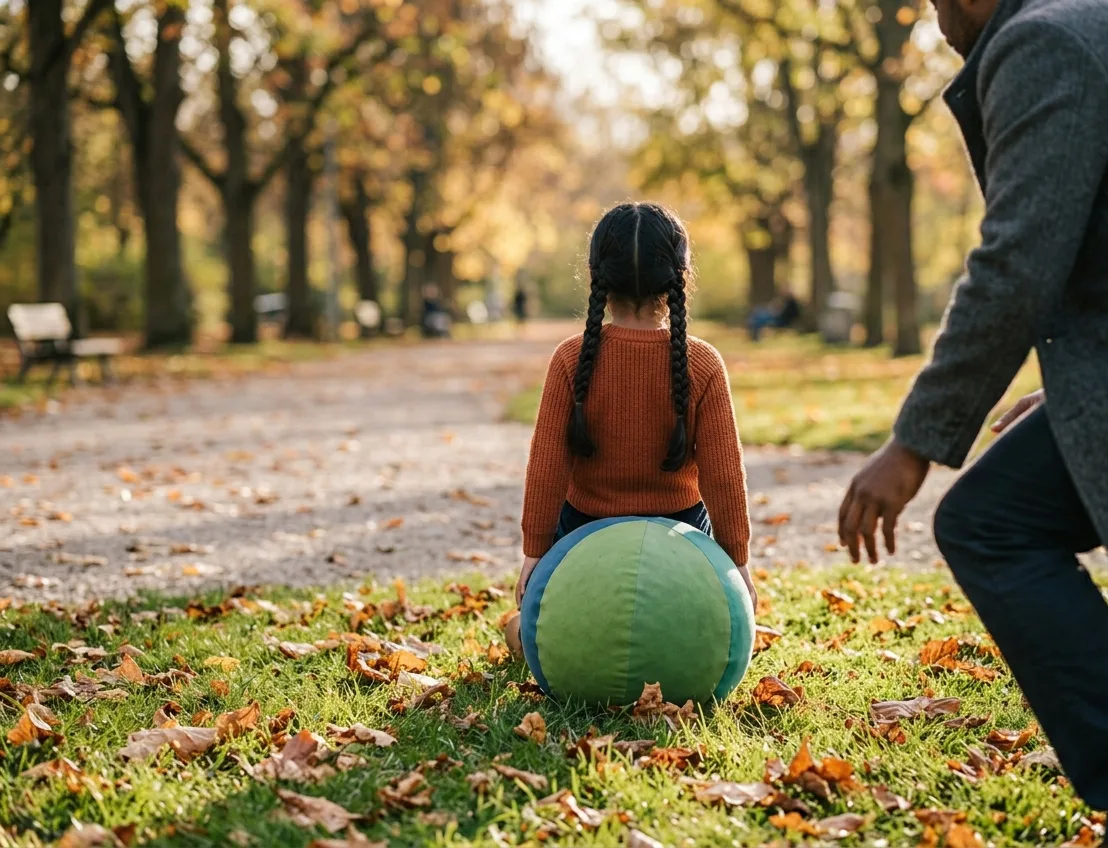
Choose simple games with clear turns. Rolling a ball back and forth, taking turns adding blocks to a tower, or blowing bubbles for each other to pop. Short, predictable games give a child a clear way in.
Give them the words. Practice simple phrases at home: "Can I play?", "My turn, your turn," "I need some space." Teddy bears and toy figures make great practice partners.
Plan a calm spot. Let your child know there is a quiet place they can go if it all gets too much, and that they are welcome to come back. Knowing they can leave often makes it easier to stay.
Notice small steps. "You played next to Sam for a long time today" means more than "Why didn't you play with the others?" Pushing a child into a group usually makes them pull away harder.
When to look for more support
It is worth talking with your child's doctor or another professional who can see your child in person if:
- your child seems uninterested in people in general, including family, not just other children
- something about the way your child connects, talks or plays worries you
- your child seems to have stopped doing things they used to enjoy or could do
- your child becomes very distressed in groups most of the time
Most of the time, a child who walks away from other children is not saying "I don't want friends." They are saying "This is too much right now." When we make the room a little quieter, the group a little smaller and the way in a little clearer, many children find their own path toward playing together.