Why Does My Child Refuse Socks? When One Seam Can Ruin the Morning
Coat on, shoes waiting, and the sock comes off again. What may be going on with sock seams, what research does and doesn't show, and what tends to help.
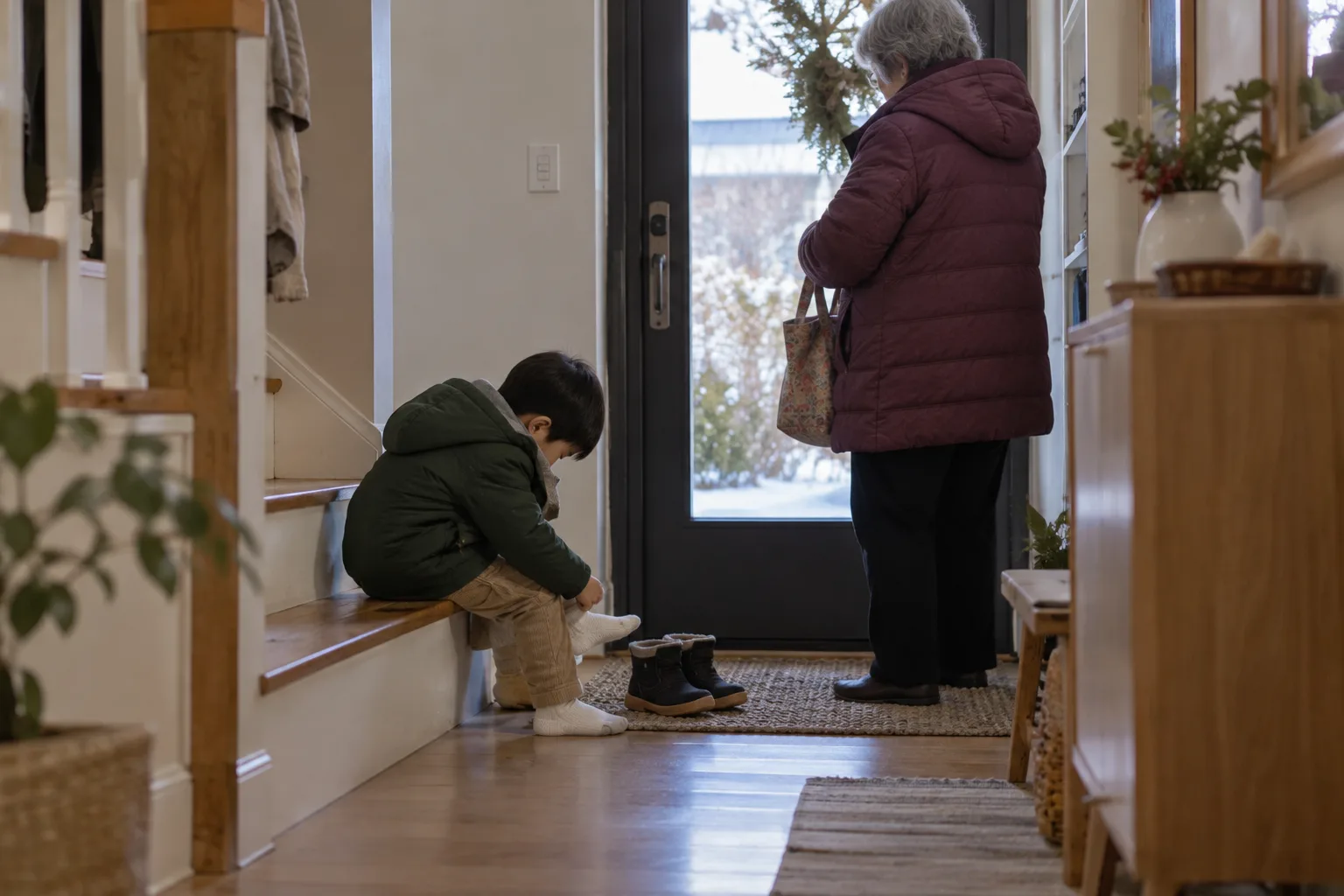
You are nearly out of the door. Coat on, bag packed, shoes waiting. Then your child stops, pulls off one sock and says it feels wrong. You straighten it. "Still wrong." You try another pair. By now you are late again, and everyone is upset, over a sock.
It can look a lot like stubbornness. Often, it isn't.
First, some reassurance
Children vary a great deal in how strongly they react to everyday touch. Mild to moderate fussiness about clothes, seams and tags is usually part of that normal variety. Disliking socks, on its own, is not a sign that something is wrong with your child.
You may have seen figures online about how many children are "sensitive." It is worth knowing that nobody has actually measured how many young children struggle with sock seams. The research looks at sensitivity to touch and sound in general, and the numbers change depending on where a study draws the line. So there is no real percentage to compare your child with, and you don't need one.

What may be going on
Some children really do feel it more. Think of a tiny stone in your shoe. You might walk on it for a while, but once you have noticed it, you cannot stop noticing it. For some children, a seam across the toes feels a bit like that. You would barely register it. They register it with every step.
Once they feel it, it is hard to ignore. You and I can usually push a small discomfort to the back of our minds and get on with the morning. Young children are still learning how to do that. So when your child says "I can't," it may be closer to the truth than it sounds. This is not the same as refusing to try.
A rushed morning makes everything louder. A child who is tired, hurried or already upset has less patience for an itchy label or a twisted heel. You may notice socks are "fine" on a slow Saturday and impossible at 8:15 on a Monday.

Will my child grow out of it?
Perhaps, but nobody can promise it. The best long-term study we have followed nearly 1,000 twins from age 2 to age 7, looking at strong reactions to touch and sound in general, not socks in particular. Here is what it found:
- Most children were not highly sensitive at either age.
- Of the 99 who were highly sensitive at age 2, about three in four no longer were by age 7. Around one in four stayed that way.
- Another group of 112 children were fine at age 2 and became more sensitive by age 7.
In other words, this changes over time in both directions, and how your child is at two does not tell you much about how they will be at seven. So it is reasonable to feel hopeful, and also reasonable to help now rather than wait.
What to notice
A few days of gentle watching will tell you a lot:
- Is it all socks, or certain ones? Thick seams, tight cuffs, new pairs, or anything at all?
- When is it worst? Rushed mornings, tired evenings, or after a long day?
- Is it only socks? Or also tags, waistbands, or other clothes?
- What calms it? Does a different pair fix it, or does it keep moving from sock to sock?
What tends to help
An honest note first: no study has tested seamless socks or wearing socks inside out. These ideas come from the experience of people who work with children, not from trials. But they are cheap, low-risk and easy to try.
Change the socks.
- Try seamless socks, or ones with very flat toe seams.
- Turn socks inside out, so the seam sits away from the toes.
- Look for soft fabrics and loose cuffs, and wash new pairs a few times first.
- When you find a pair that works, buy several of the same.
Let your child choose.
- Offer two acceptable pairs and let them pick, the night before if you can.
- Let them put the socks on themselves, and straighten the toe until it feels right.
- Having a say can take a lot of the heat out of the morning.
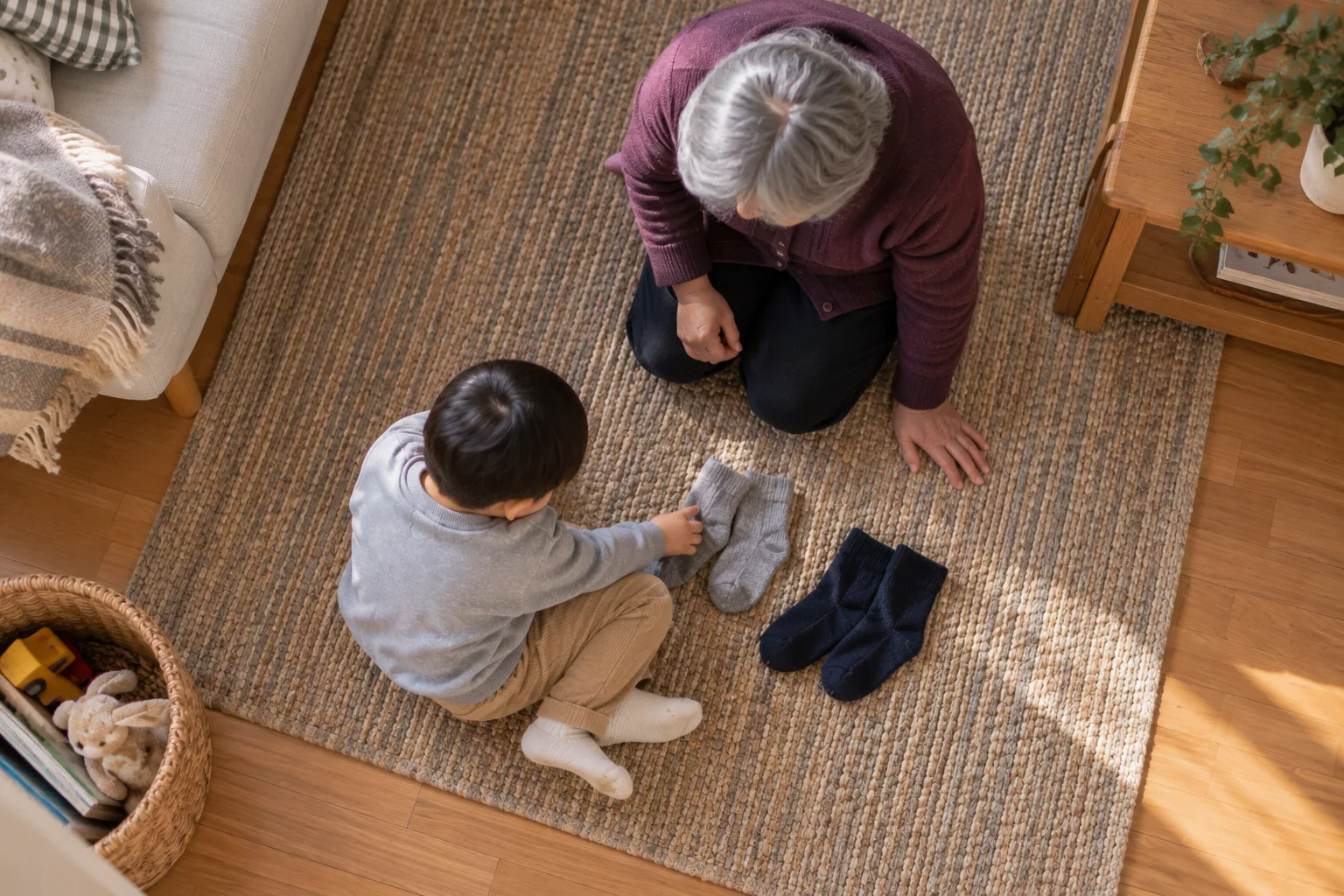
Go slowly with the harder socks. If your child needs to get used to a certain pair, such as for school, try them for a few minutes at a calm time, while doing something fun. Add a little time each day, and let your child take them off when the time is up. Getting used to something step by step is the approach with the most research behind it, though those were small studies and none of them looked at socks.
Leave more room in the morning. Build in five spare minutes for socks, and do them before the coat goes on, not at the door.
What tends to backfire. Forcing socks on, or insisting "it doesn't hurt," usually makes the next morning harder. Your child learns to dread socks, and that their feelings don't count. "That seam feels annoying, doesn't it. Let's find a better pair" gets you out of the door faster in the long run.
What you can skip. You may read about brushing routines or weighted vests. The American Academy of Pediatrics has said the evidence for these is limited, and a child who is simply fussy about socks is unlikely to need them.
When to talk to your child's doctor
It is worth talking with your child's doctor or another professional who can see your child in person if:
- it regularly stops your child getting out of the house or going to daycare or school
- dressing leads to big meltdowns most days, or it is affecting sleep, eating or family life
- it is spreading to other senses, such as covering their ears at everyday sounds, or refusing many food textures
- you also have other concerns about how your child talks, plays with others or moves
- you have tried different socks and gentle steps for several weeks, and nothing has changed, or it is getting stronger
Before the appointment, jot down a few notes for a week: what was happening, which clothes, and how long it took to settle. That simple diary can be very helpful.

A child who battles over one sock is usually not trying to make you late. They are telling you, in the only way they can, that something feels wrong. Take that seriously, find the softest socks you can, and many mornings get a little easier.