Why Does My Child Keep Spinning and Jumping? Should I Make Them Stop?
Round and round in the living room, bouncing on the sofa, never dizzy. Here is why some children crave movement, and safe ways to give them what they need.
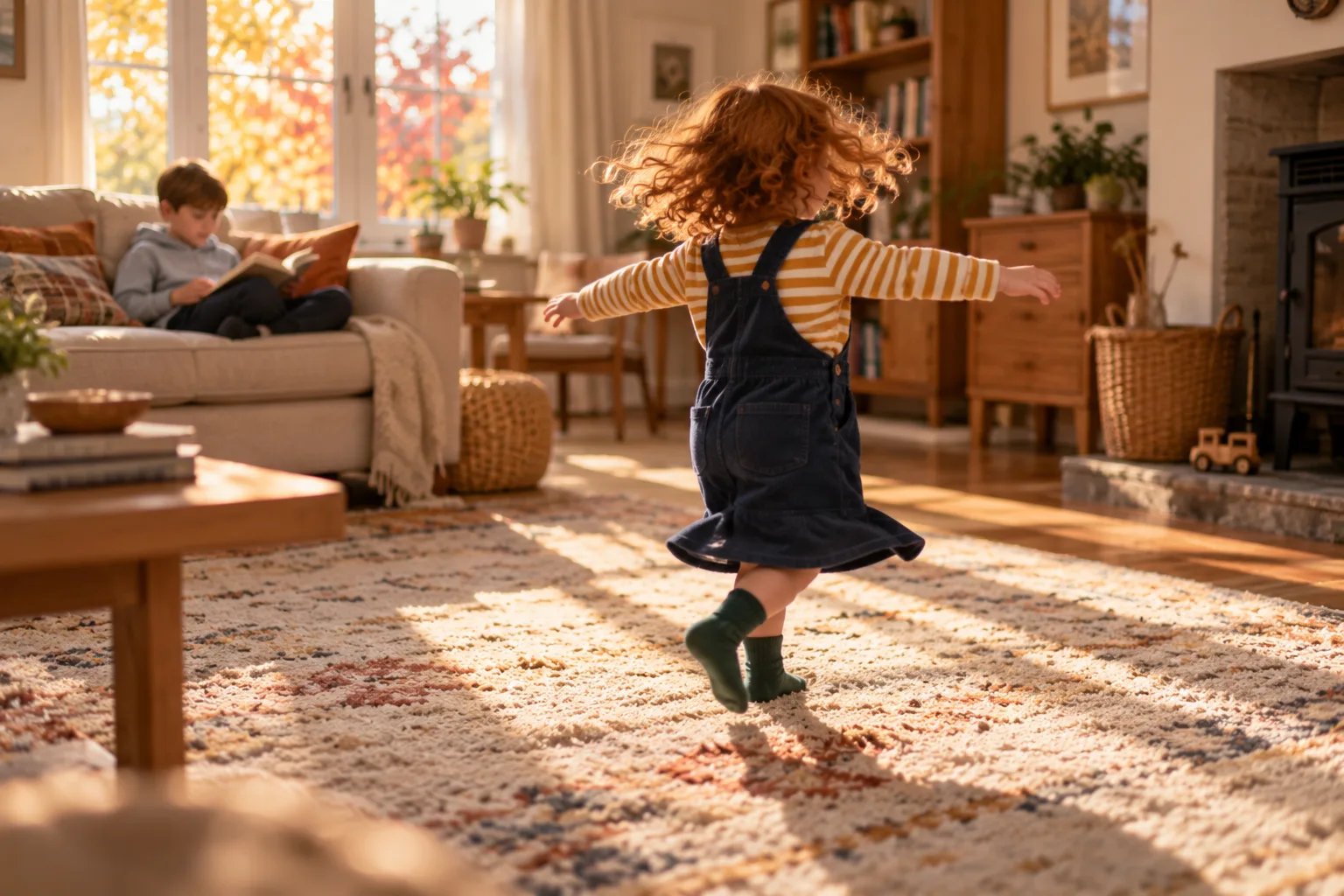
You look up from the kitchen and your child is spinning in the middle of the living room, arms out, hair flying, round and round and round. Ten turns, twenty turns. They stop, wobble for half a second, laugh and start again. Or maybe it is jumping: on the sofa, on the bed, off the bottom stair, over and over until you are worn out just watching.
You might worry they will get hurt, or wonder whether you should put a stop to it. You might also wonder why they never seem to get dizzy, when two turns would leave you feeling queasy.
First, some reassurance
Spinning, bouncing, swinging and rolling are some of the most loved feelings of childhood. Think of how many fairground rides are built around them: teacups, roller coasters, merry-go-rounds. Adults pay good money to be whirled about too.
For young children, this kind of movement is not only fun. It helps their bodies learn balance, coordination and how to stay upright when the world tips and turns. Most toddlers and preschoolers go through phases of spinning and jumping, and many simply grow into other ways of moving.
So the real question is not "Should I stop this?" It is "What is my child getting from it, and how can they get it safely?"

Why some children spin and jump so much
Some bodies need a bigger dose. Think about coffee. One person feels wide awake after half a cup. Another needs three before they notice anything. Movement can work a bit like that. Some children feel "just right" after a little swinging. Others need a lot more spinning and bouncing before their body feels satisfied, and they may barely feel dizzy at all. They are not being wild on purpose. They are topping up something their body is asking for.
Movement helps them feel steady and calm. Many of us pace when we are on the phone, jiggle a leg in a meeting, or rock a crying baby without thinking. Rhythmic movement settles the body. A child who spins while waiting for dinner or jumps after a long morning at daycare may be using movement to calm down, wake up or shake off a busy day.
Big feelings need a way out. Excitement, boredom, nerves and frustration all build up in the body. Jumping and spinning are quick, easy ways to let some of that out, which is why you might see more of it on a birthday morning or after a hard day.
Watching the world whirl can be part of the fun. For some children, it is the visual side they enjoy: the room blurring past, lights flickering as they turn, or the steady pattern of a fan, a washing machine or spinning wheels. They may also love lying down to watch toys spin, or tipping their head to see the world from a new angle.
When does it happen most?
The clues are usually in everyday life. Over a week or two, notice when the spinning and jumping happen, and what was going on just before:
- Waiting: in a queue, before dinner, while you get ready to leave the house?
- After sitting still: coming home from daycare, after a long car ride or a meal?
- When the room is busy: visitors, music, siblings playing loudly, a crowded shop?
- When things are quiet: first thing in the morning, before bed, or when there is nothing to do?
- During screen time: jumping up and down while watching a favourite show?
- When feelings are big: excited, upset, nervous about something new?
It is also worth noticing what kind of movement your child chooses. Is it mostly spinning, mostly jumping, or both? Do they also love swings, slides and being swung around? Or are they more interested in watching things spin than spinning themselves? And how do they seem afterwards: calmer and happier, or more wound up?
What tends to help
Trying to stop the movement altogether rarely works. The need does not go away, so it tends to pop out somewhere else, often at the worst moment. It usually helps more to give it a safe, regular place in the day.
Make it safe, not forbidden.
- Clear a spinning spot away from sharp corners and furniture, and use a rug or soft mat.
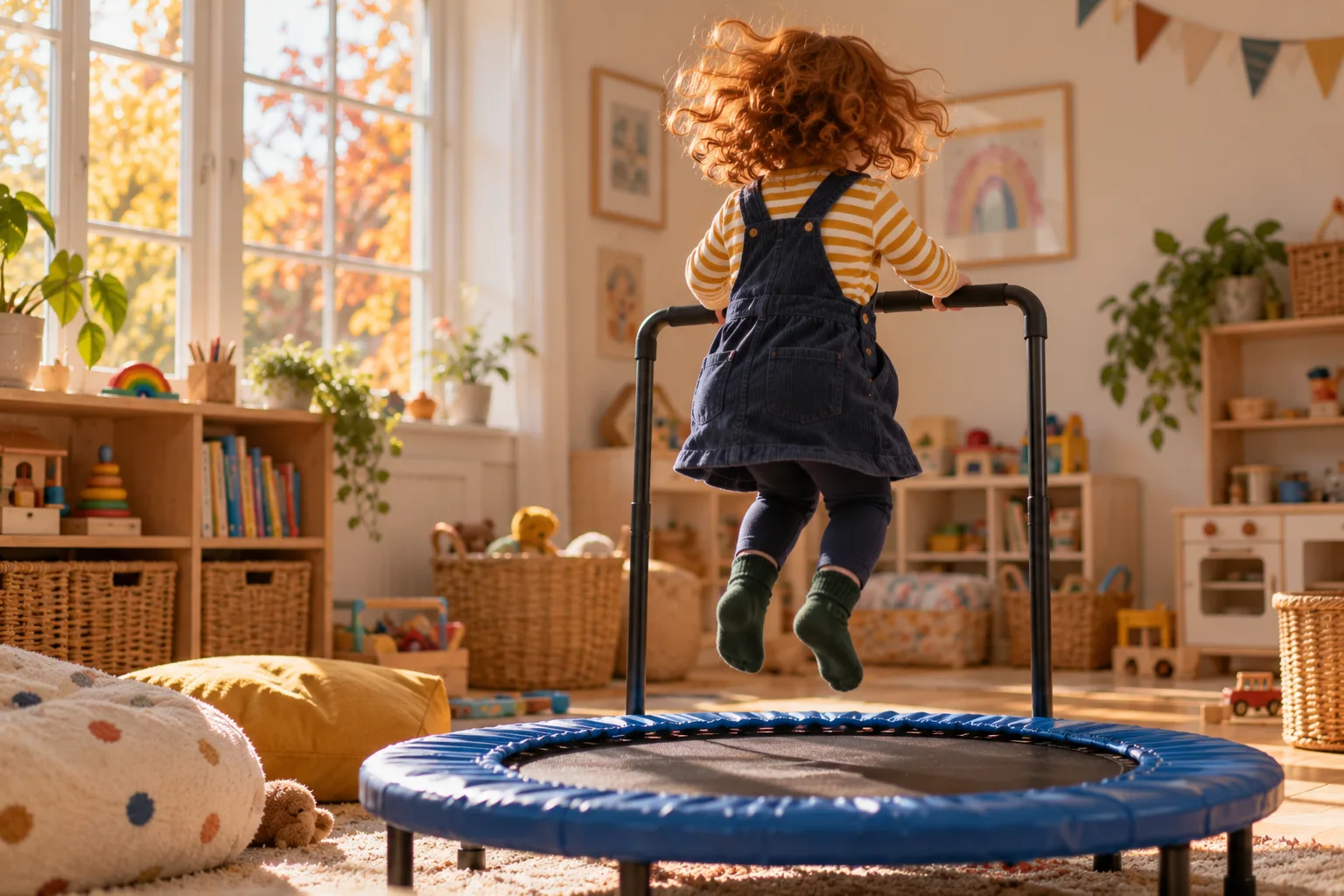
- Agree on places that are fine for jumping, like a small trampoline with a handle, a mattress on the floor or a pile of cushions, and places that are not, like the top of the sofa.
- Stay close for bigger jumps and climbs, and keep spinning to a few minutes at a time.
Offer the same feeling through play.
- Swings, slides, roundabouts and see-saws at the park.
- Spinning on an office chair or a spinning seat, slowly and with you in charge of the speed.
- Gentle "aeroplane" spins, holding your child firmly around the body rather than by the hands or arms.
- Rolling down a grassy hill, somersaults on a soft mat, or log rolls across the bed.

Plan movement into the day. A good burst of movement before a time when your child needs to sit still, like before a meal, a car ride or story time, often makes the sitting much easier. Morning dance parties, a trip to the park after daycare, or ten big jumps between activities all count.
Follow big movement with something calming. After spinning and jumping, try a slow wind-down: a tight hug, carrying something heavy, pushing a laundry basket, or lying under a blanket. Firm, steady pressure helps many children come back to calm.
Turn it into a game with rules. "Spin five times, then freeze like a statue." "Jump like a frog to the door, then tiptoe back like a mouse." Games like these keep the fun while helping your child practise starting and stopping.
When to look for more support
It is worth talking with your child's doctor or another professional who can see your child in person if:
- your child can spin for a very long time and never seems dizzy at all
- spinning or jumping fills most of the day and gets in the way of eating, sleeping or playing with others
- it is very hard to stop, and stopping leads to big, long meltdowns
- your child often gets hurt, or does it in unsafe places like stairs or roads
- their balance seems unsteady, or they fall a lot, more than you would expect
- they are also strongly bothered by many other sensations, such as sounds, textures or being touched

A child who spins and jumps is usually not misbehaving. Their body is asking for movement, and it is very good at asking. When we stop saying "stop that" and start saying "let's do it safely, and here is a great place for it," many children find their balance, in more ways than one.