Why Does My Toddler Walk on Tiptoes? What It May Mean and What Helps
Some toddlers spend most of the day on their toes. Here is what may be going on, when to check with a doctor, and simple play that helps feet settle onto the ground.
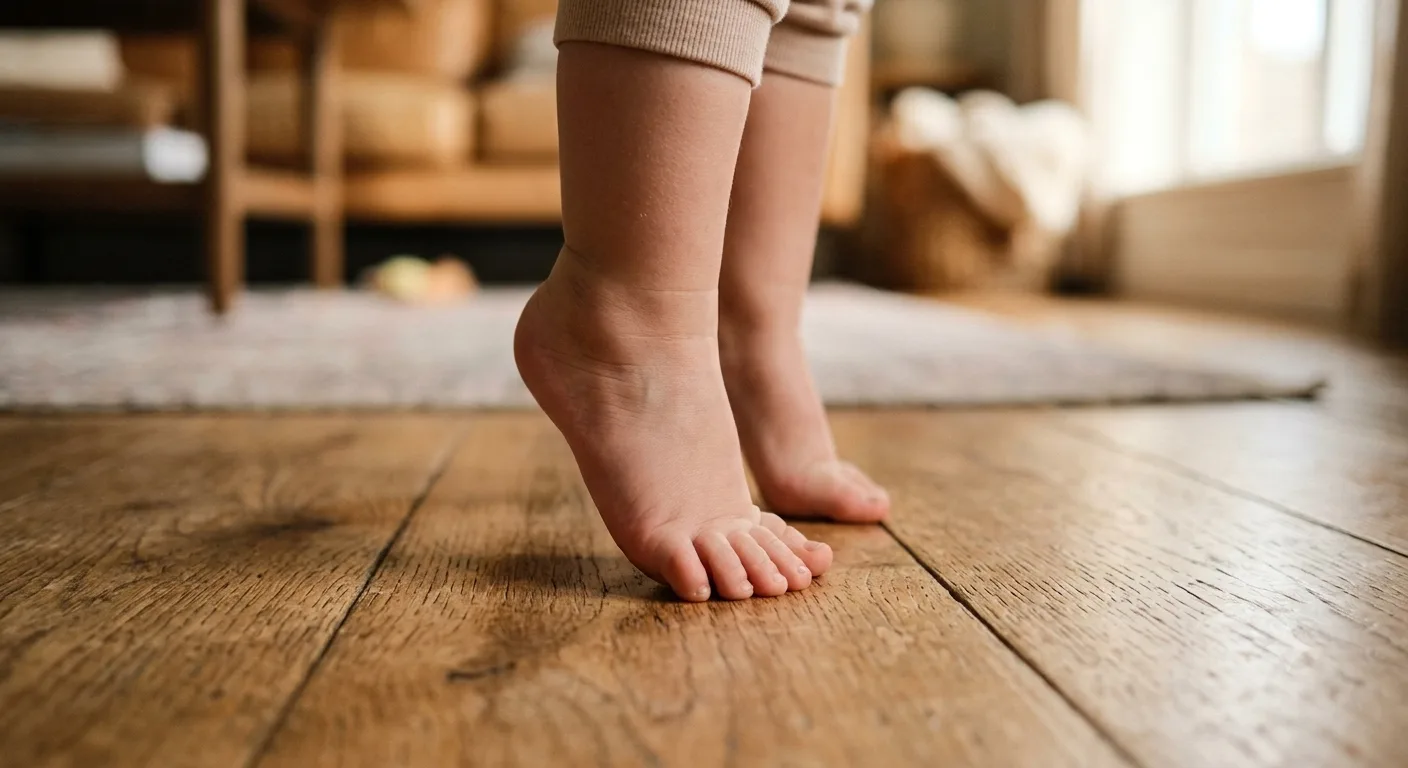
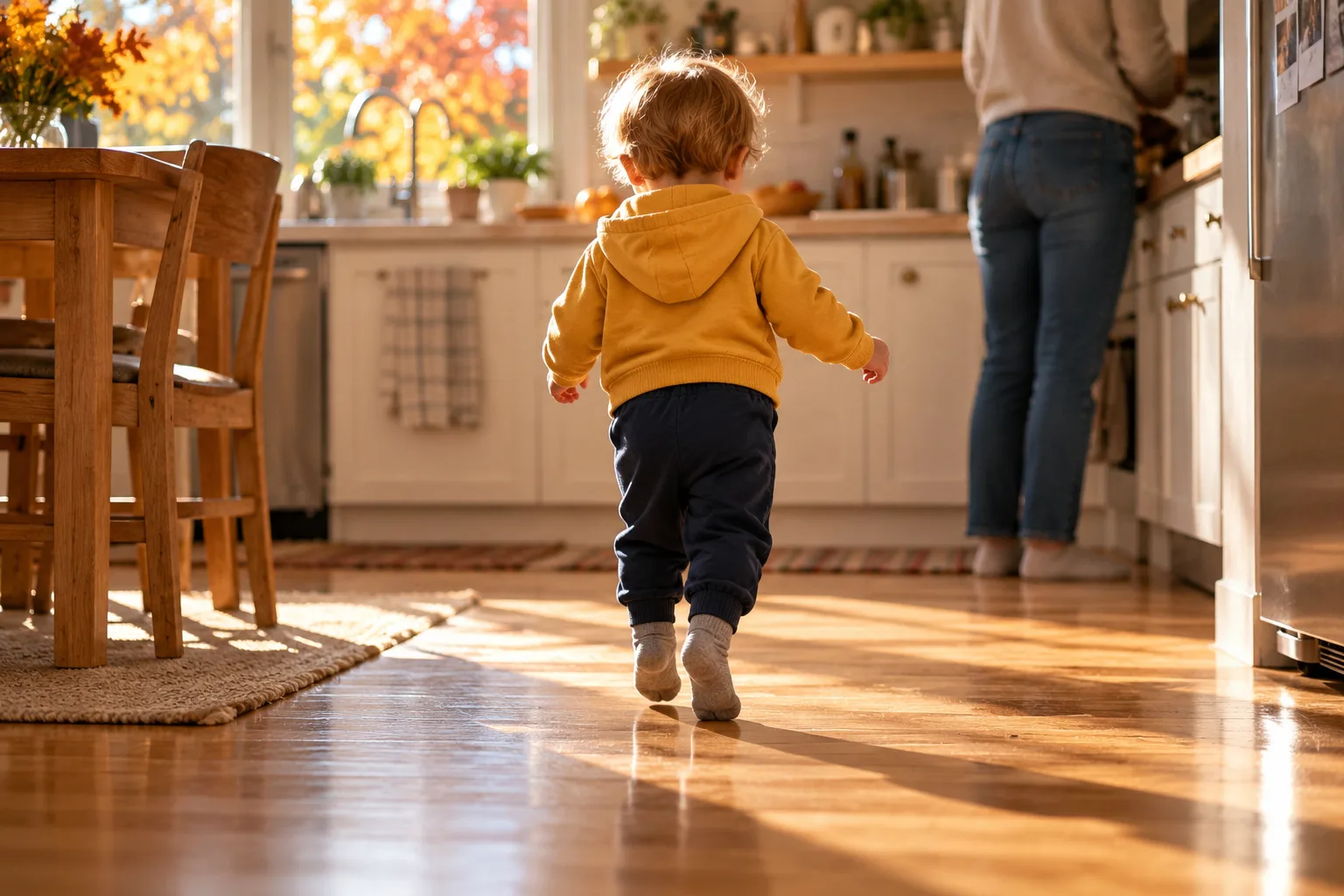
You turn around and there they are again: padding across the kitchen on their toes, heels never quite touching the floor. Maybe a relative has already said something about it. Maybe you have caught yourself saying "heels down!" more times than you can count.
Here is the reassuring part first. Walking on tiptoes is common in toddlers, especially in the first year or so of walking, and many children simply grow out of it. But when it sticks around, it is worth understanding what your child's body might be telling you.
First, a quick body check
Before anything else, try this: ask your child to stand still, flat-footed, with heels on the floor. Then watch them squat down to pick up a toy.
Please check with your child's doctor if:
- they cannot get their heels flat on the floor, even when standing still
- their calves or ankles feel tight, or they complain of leg pain
- it happens on one side only
- they used to walk flat-footed and have recently changed
- they trip or fall a lot, more than you would expect
- it is still happening most of the time long after they first learned to walk
These are body questions, not habit questions, and a doctor who can see your child in person is the right person to look at them.
If your child can stand flat, squat easily and walks heel-first some of the time, read on.
Three everyday reasons children rise onto their toes
1. The floor feels like too much. For some children, certain surfaces feel genuinely uncomfortable under bare feet: cold tiles, scratchy grass, sand, a rough rug. Standing on tiptoes keeps as little of the foot touching the ground as possible. You might notice it happens more barefoot than in shoes, or on some floors but not others.
2. The body is waking itself up. Think of how you stretch, roll your shoulders or shake out your legs when you feel sleepy at your desk. Bouncing up onto the toes can do the same thing for a child. It gives the body a little jolt of feeling that helps them stay alert, or helps them settle when they are excited.
3. The feet are asking for more. Some children seem to feel the ground less clearly than others. Pushing hard through the toes gives their feet a stronger signal, a bit like pressing harder on a pen when the ink is faint. These children often love jumping, stomping and crashing, too.
Many children are a mix of these. A few days of quiet watching (which floors, which times of day, shoes or bare feet, calm or wound up) will tell you a lot.
What tends to help
Constant reminders to put their heels down rarely work, and they can turn walking into a battle. Instead, give their feet experiences that make standing flat feel good.
If the floor feels like too much:
- Start where they feel comfortable. Firm-soled shoes or a smooth, solid floor are fine to begin with.
- Make new textures a game, never a test. Walk "like a bear" across a towel, then a rug, then grass, and let your child choose how far to go.
- Try big, slow stomping: "dinosaur feet" or marching to music. Firm, full-foot pressure is often easier to tolerate than light touch.
If the body needs waking up, or the feet are asking for more:
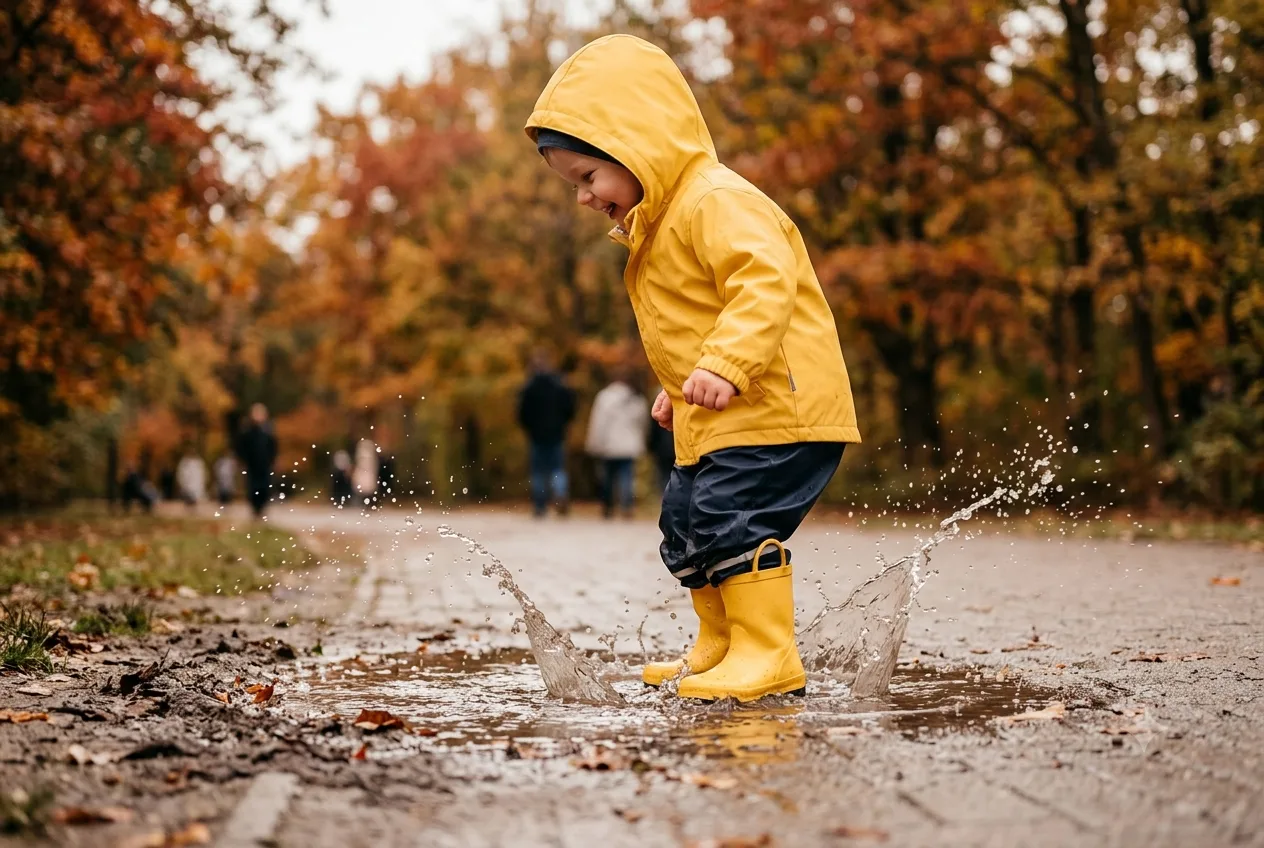
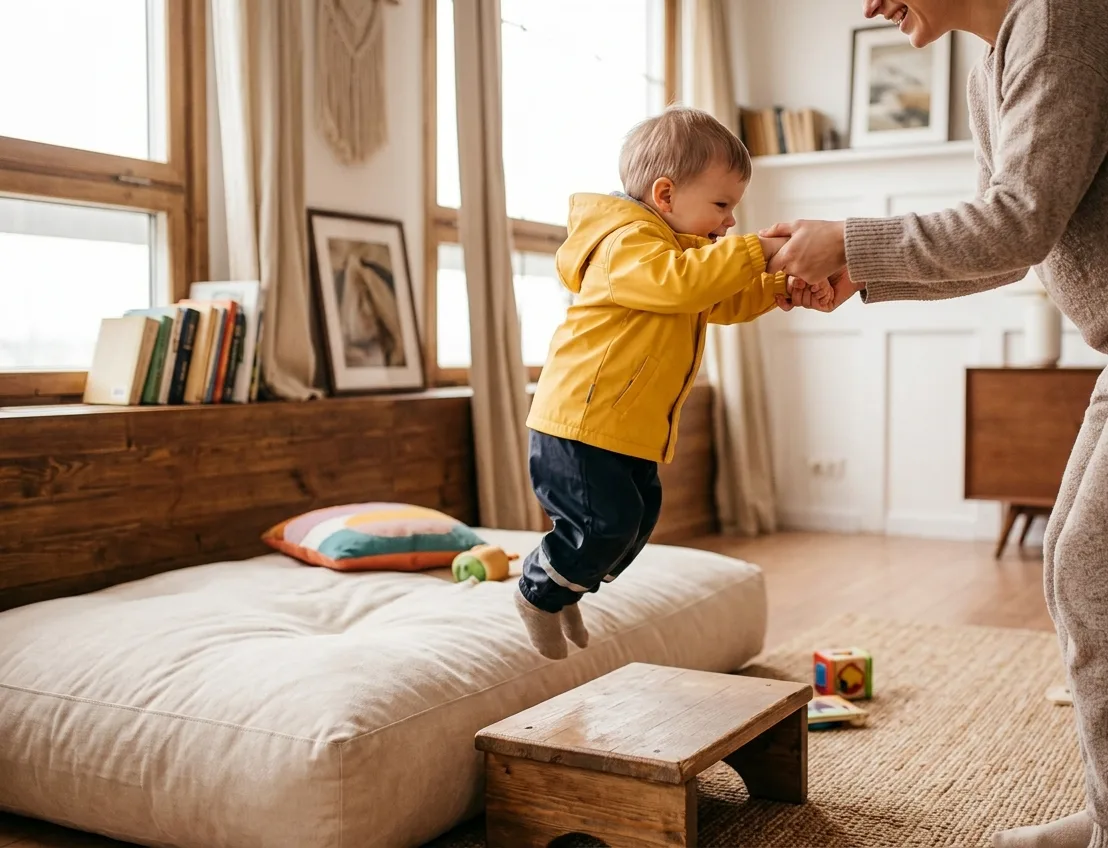
- Jumping: on a small trampoline with a handle, off a low, safe step onto a cushion, or in puddles in rain boots.
- Stomping and marching games, hopscotch, and later, jump rope.
- Walking uphill, up ramps or up stairs, which naturally brings the heels down.
- Carrying something with a bit of weight, like a small laundry basket or a backpack with a few books.
For everyone: practice landing on the whole foot.
- Squat to play: picking up toys from the floor, gardening, building low towers.
- Balance games: walking along a low curb or a line of tape, holding your hand at first.
- Rocking slowly from toes to heels while singing a song together.
The bigger picture
Tiptoe walking is rarely about stubbornness. More often, it is a child finding their own way to feel comfortable and steady in their body. When you meet that need through play instead of correction, many children gradually find their way down onto their heels.
Watch, play, and keep the body check above in mind. If something there worries you, a visit to your child's doctor is always a good next step.