Why Does My Toddler Only Eat Beige Food?
Pasta, crackers, plain bread, and the stew pushed away again. Three things parents often believe about beige-only eating, and what may be going on instead.
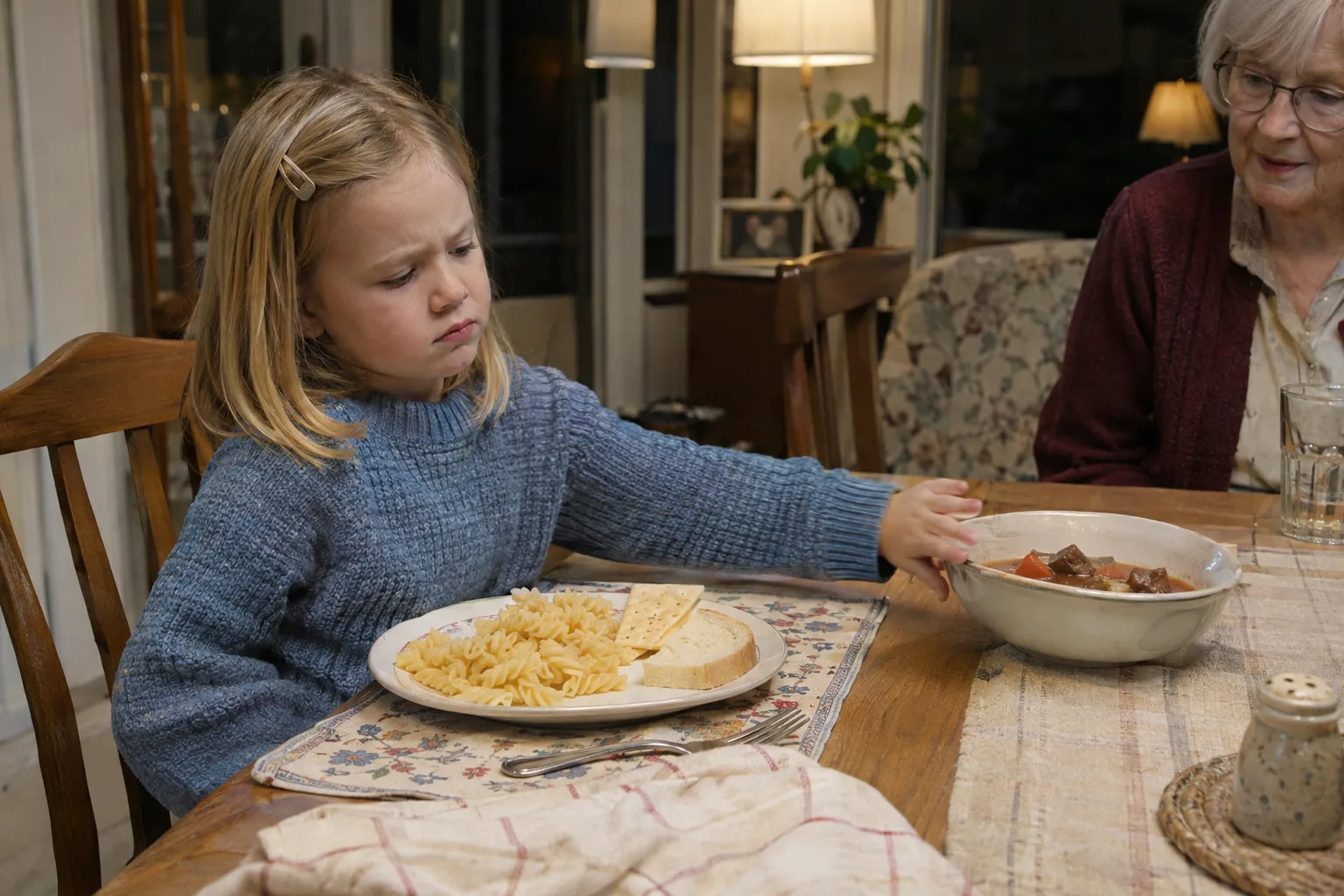
Pasta again, with a few crackers and a slice of plain bread. The stew you made goes nowhere near her mouth. One small hand pushes the bowl to the far side of the table, and she goes back to her crackers.
Plain pasta, toast, crackers, chips, chicken nuggets. If you drew your child's menu, you'd only need two crayons, white and brown. And somewhere along the way, a few beliefs about it may have crept in. I want to go through three of the most common ones, because at least two of them tend to make dinner harder.
"I must have done something wrong"
This is usually the first one. Maybe you gave in too often. Maybe you didn't offer enough vegetables when she was a baby. Maybe you've been too strict, or not strict enough.
Researchers have looked at this by following children over several years, roughly from age two to five. In two of those studies, the child's fussiness came first more often than the parent's habits did. Parents of choosy children became more careful, more pushy or more restrictive after the fussiness showed up. So the bargaining you may now catch yourself doing is more often a reaction to a picky eater than the cause of one.
Choosy eating is also very common in the toddler and preschool years. It's one of the things parents of two- to six-year-olds worry about most.
That doesn't mean nothing you do matters. It does. Some of what parents do at the table can keep the cycle going, and that's the third belief below. But "I caused this" is usually not the right starting point.
"She's just being stubborn"
From across the table, a refusal is a refusal. Up close, two children can push away the same plate for quite different reasons, and what helps is different for each.
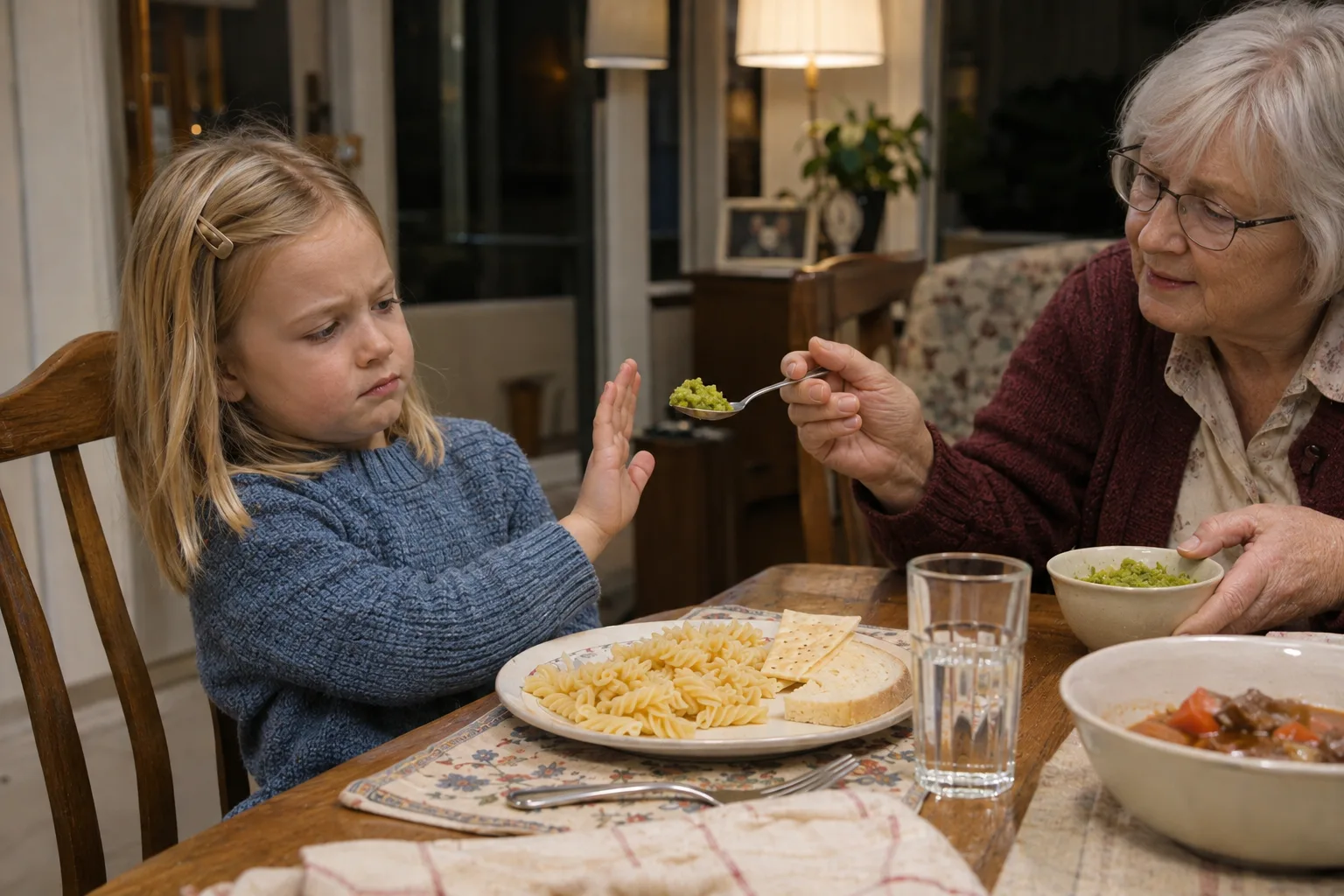
For one child, it's how the food feels. Picture a five-year-old who eats crackers, dry toast and plain pasta. What those foods have in common isn't the colour. It's that they feel the same every time, crunchy or smooth, with no surprises. Mushy, slimy and lumpy foods are another matter, and mixed textures like stew are the hardest of all. A spoonful of mashed peas touches her lips and she gags. Even a familiar cracker can be refused if the brand changes and it crunches a bit differently. She may also be fussy about clothing labels, sock seams or sticky hands.
For a child like her, food can feel much stronger in the mouth than it does to you. In one study of school-age children and teenagers, being sensitive to how food feels in the mouth was linked to picky eating. So was a strong need for things to stay the same, and each of the two counted separately. Many beige-only eaters seem to have a bit of both. That usually means progress is slow. Small steps can happen, but the overall pattern tends to shift over months, not weeks.
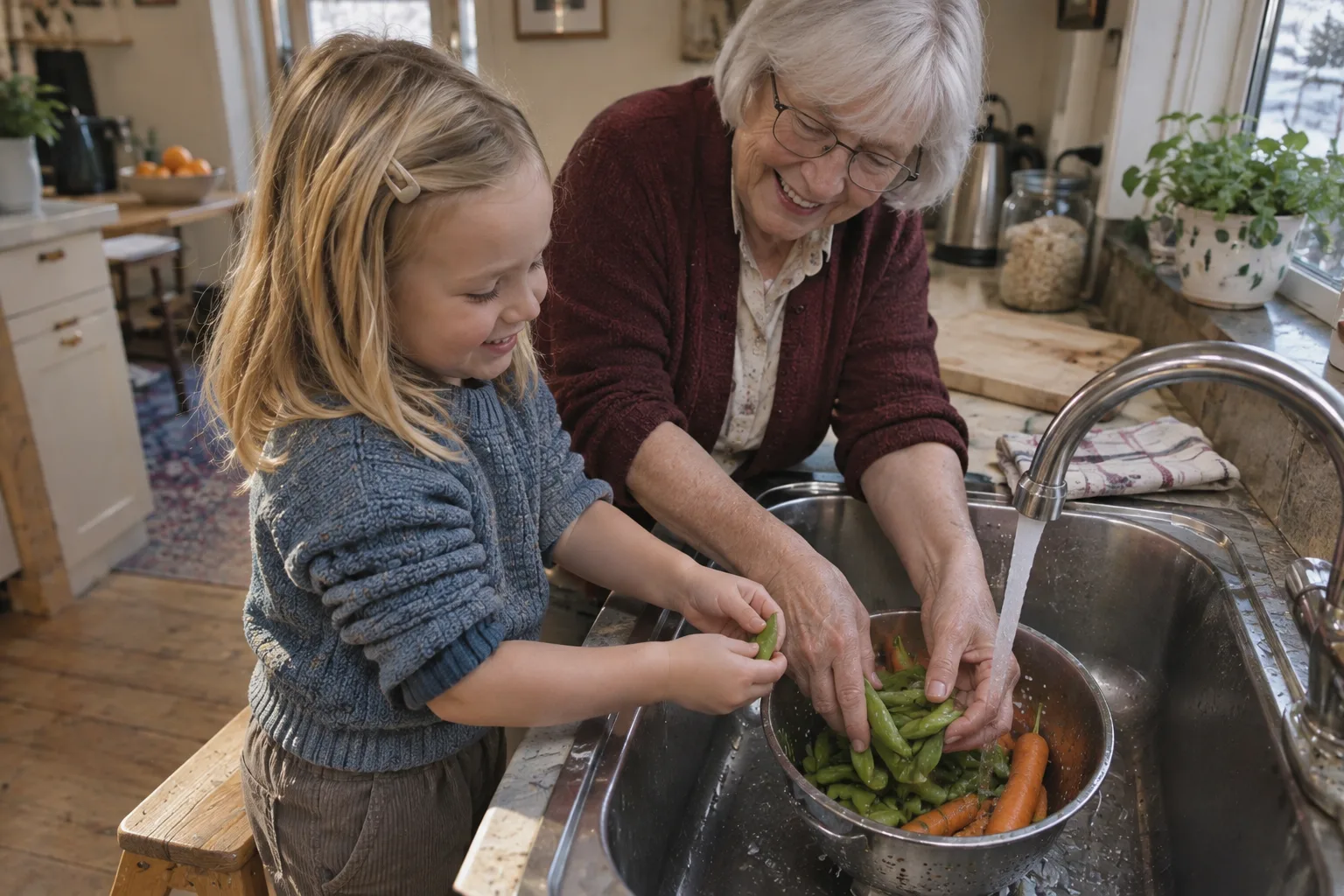
What I'd try with her is meeting new food away from her mouth first. Let her touch it, smell it, help you wash or tear it, with no expectation that she'll eat it. "You don't have to eat it, just help me wash it." Hands are often an easier first meeting than lips, and it lets her learn what a food is like before it's anywhere near her tongue. This hasn't been tested in large studies, so think of it as worth a try without a promised result.
If she won't even hold it, let her watch you handle it, or start with something dry, like a green bean before it's cooked. If gagging is a big part of your child's story, there's more about it in this note on gagging at mealtimes.
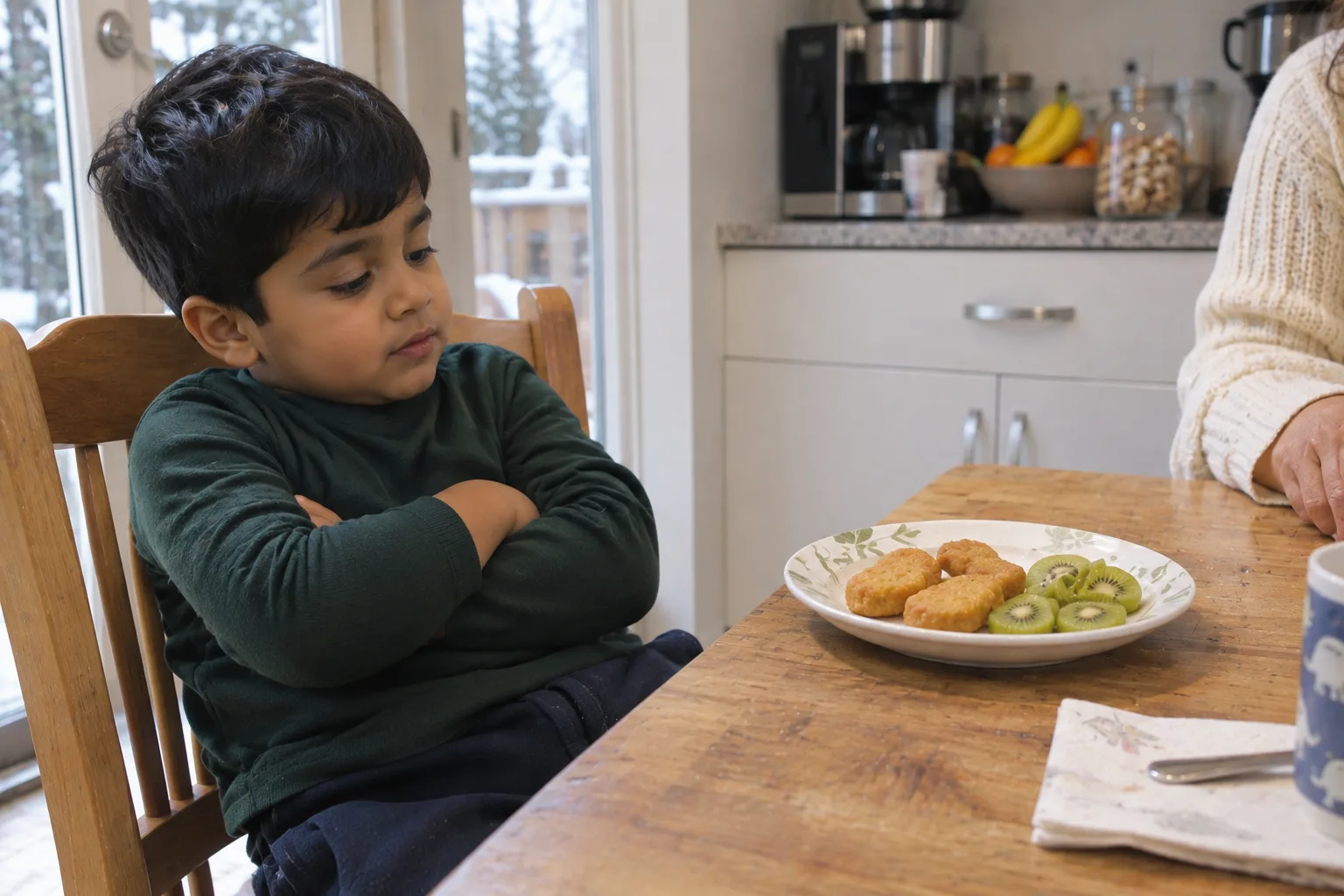
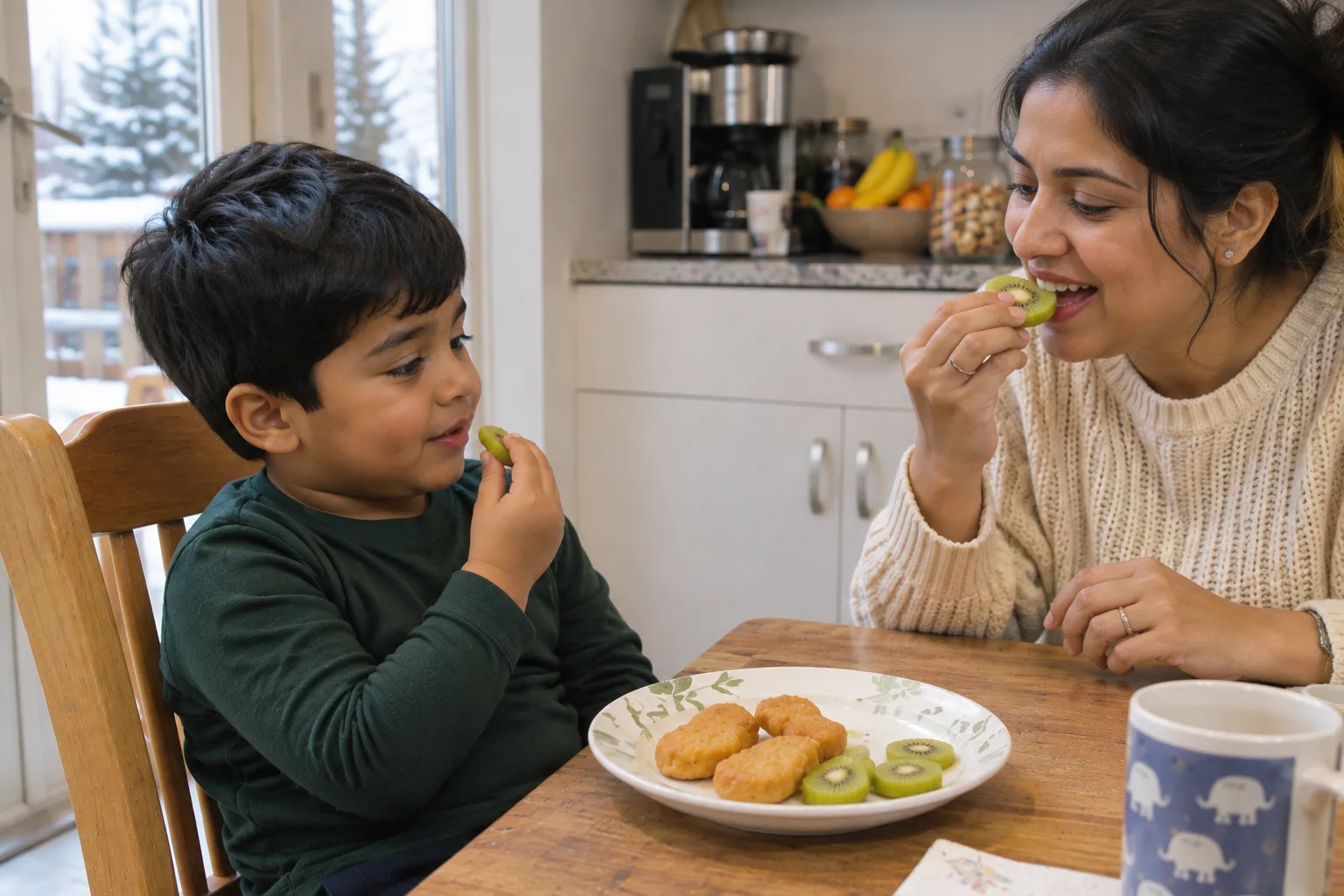
For another child, it's that the food is new. Picture a four-year-old who turns his head away from kiwi before it's even on his fork. He hasn't tasted it, so the texture isn't the problem yet. It's the unfamiliar look of it. Give him a nugget in a new shape and he'll eat it once he realises what it is. This wariness of new food is a normal part of being two to six. It tends to ease as children get older and see a food more often.
For a child like him, the most useful thing is simply seeing the food again and again. Put a very small piece of the new food next to foods he already likes, at meal after meal, and leave it there. "It's here if you want a tiny bit." Then eat some yourself and enjoy it where he can see. In one trial with children aged two to six, parents offered a tiny taste of a vegetable every day for two weeks, and the children came to like it more and ate more of it. It often takes somewhere around eight to fifteen times. So if he's refused it five times, you're probably not halfway yet.
If even a piece on his plate is too much, put it on a little dish beside his plate, or on yours.
"One bite won't hurt"
This one is the hardest to let go of, because it sounds so reasonable. Just one bite. Then you can have dessert.
In an experiment with preschoolers, children who were told to finish a food ate less of it than when nobody pushed, and they said more negative things about it. Using dessert as a reward has a similar problem. It tells a child that the vegetable is the price and the dessert is the prize, so the vegetable seems even less worth wanting.
So for both children:
- Drop the "one bite" rule. It can turn a small dislike into a standoff. Without the pressure, curiosity has a bit more room.
- Keep dessert out of the deal. If you serve it, serve it whether or not the plate is clean.
- Keep one safe food on the plate at every meal. Something you know she'll eat, in the same brand and shape. Then there's always something she can eat, and the new food is just a guest. This comes from experts' experience more than from trials, but it makes mealtimes calmer.
Which one sounds like your child?
- Does your child refuse new foods by sight, or only once they touch their mouth?
- Do they gag on mushy or mixed textures, even in small amounts?
- Is a new brand of a favourite food a problem?
- Do labels, seams or messy hands bother them too?
- Have they ever come round to a food after seeing it many times?
If you'd like to see how your child responds to touch, sound and movement in everyday life, you can start a free Sensory Portrait. It takes about 6 minutes.
When to look for more support
It is worth talking with your child's doctor or another professional who can see your child in person if:
- your child is losing weight, or isn't growing or gaining as expected
- they gag or choke on water or other drinks, not only on certain foods
- they seem afraid to eat after an episode of choking or vomiting
- eating is getting in the way of nursery, school or family life
If none of these apply and your child is growing well and has plenty of energy, this is usually something you can work on slowly at home.
A beige plate on the table every night can feel like a verdict on your cooking. It usually isn't. One child needs food to feel safe in her mouth before she'll try it. Another needs to see it many times first. Both take time, and neither one needs a fight.
If you have more questions about your child, leave them for me on Instagram at @sensory_portrait or at help@sensoryportrait.com.